Ninety seconds. That’s how fast flight attendants must be able to evacuate a full airliner, according to a Washington Post report on Delta’s training center. The person who handed you a ginger ale ten minutes earlier has drilled for exactly that.
What does it take to be a flight attendant? In other words, what qualities do you need to be a flight attendant? Most people picture the smile and stop there. The reporter who spent a day at Delta’s training campus found something closer to basic training than to “waitress in the sky.” One passenger summed it up in a note Delta shared: a flight attendant needs “the attitude of Mary Poppins, the fortitude of a Viking, the energy of a toddler and the flexibility of a world-class gymnast” Funny. Also close to true.
Here’s the good news. You already own some of these qualities. If you’re the friend people call at midnight, you have empathy. If you’ve kept your voice level during an argument at work, you have composure. If you’ve learned a new job in a week, you can learn.
I went through requirements from airlines in the US, Canada, Australia and the UK. I also read what working flight attendants say the job takes. I grouped the 12 qualities below into five families: emotional, social, educational, physical and professional. As you read, count how many you already have. Then notice which ones you can build.
Emotional Qualities
1. Empathy
Delta flight attendant Frances McGee has flown for about 35 years. Her approach to passengers is simple: “treat them as if they are in our homes.” She adds that you don’t know why someone is traveling until you talk with them.
That’s empathy at 35,000 feet. Virgin Atlantic cabin crew member Carly says the job sometimes means delivering bad news or dealing sympathetically with someone who has missed their flight.
You may already have it if: you notice when someone’s quiet in a room and ask them about it.
2. Composure Under Pressure
Calm isn’t a personality type. It’s a skill the airlines train.
Delta’s instructors teach evacuation commands that are short and clear, delivered with urgency but also calm. Flight attendants there are also trained in self-defense and de-escalation. United’s job description expects you to communicate effectively during high-stress situations such as aircraft evacuations, security threats, delays, medical emergencies, severe weather and turbulence.
For example, imagine a delayed flight and a frustrated passenger. Composure means you lower your voice while theirs rises.
You may already have it if: you’ve worked retail on Black Friday and still smiled at checkout.
3. Adaptability and Resilience
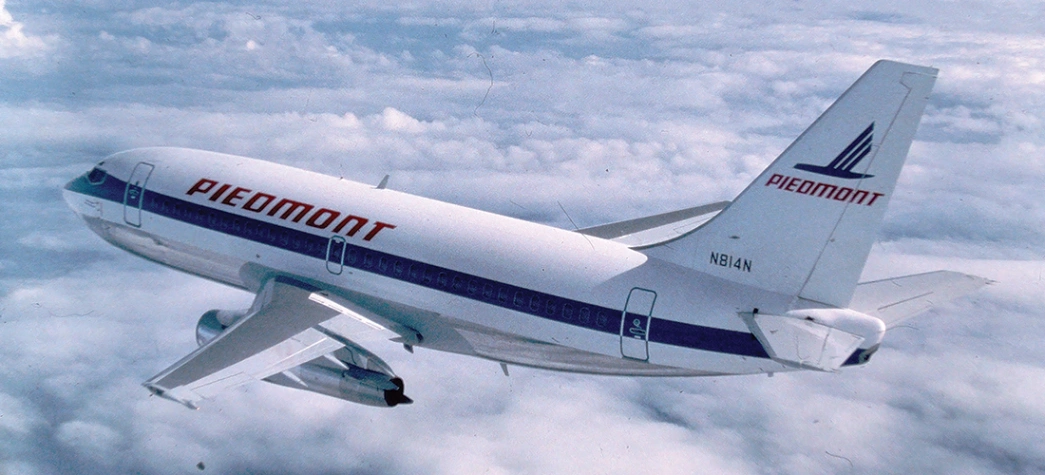
Joyce, a flight attendant at Piedmont Airlines (an American Airlines regional carrier), remembers what trainers told her: “the only thing we could depend on is change.”
Delta’s Rachel McCarthy, vice president of in-flight service for Atlanta operations, says Delta looks for people who are resilient and adaptable. She puts the schedule bluntly: “it’s not 9 to 5.” Expect early mornings, late nights and overnight flights.
You may already have it if: a cancelled plan makes you reach for plan B instead of giving up.
Social Qualities
4. Clear Communication
You’ll talk to passengers, gate agents, pilots and fellow crew, often in the same five minutes. United’s job description asks for speech that’s clear, concise and organized, and loud enough to be heard in an emergency.
Carly at Virgin Atlantic says “Making relationships quickly is a very important part of the cabin crew role.” You’re on a flight with strangers. There’s no warm-up period.
You may already have it if: you can explain a confusing idea so a stranger understands it the first time.
5. Teamwork
Qantas Group’s Monika Zdrojewska says she looks forward to “creating amazing moments for our customers together with my colleagues.” Note the word together.
Delta’s Frances McGee says she’s made true friends at work, some for 35 years. That’s not an accident. Crews form fast, split tasks without talking much and cover for each other. In training, Delta students even hoist each other into a life raft.
You may already have it if: you’ve played team sports or held a group project together.
6. Confidence Working Alone
Some flights have one flight attendant. At Piedmont, that person handles everything from pre-flight checks to the safety demonstration to catering. Dakota, a Piedmont flight attendant, notes the extra responsibility. But you can personalize the experience for your passengers.
Even on bigger aircraft, you’ll make fast calls without a manager nearby.
You may already have it if: you’ve traveled solo or run a shift without supervision.
Educational Qualities
7. A Willingness to Learn
You don’t need a degree. Delta requires a high school diploma, GED or equivalent. United lists a high school diploma or GED, with two or more years of college preferred.
What you do need is a learner’s stamina. Delta’s training runs seven weeks. Students must keep a 90% average on knowledge assessments and pass hands-on evaluations within three attempts. Delta instructor Janae Bride teaches “galley geography.” Crew memorize where everything is stored so they can find items without opening and slamming compartment doors.
In Australia, Network Aviation (part of the Qantas Group) lists a current Senior First Aid Certificate and a Responsible Service of Alcohol certificate. You can earn both before you apply.
You may already have it if: you pick up new software or routines quickly.
8. Language Skills
Fluent English is the baseline. WestJet’s cabin crew requirements say you must “Be fluent in English.” Delta requires you to speak, read and write English fluently. Delta also hires bilingual candidates for Language of Destination roles. United calls proficiency in a second language highly desirable.
If you speak another language, say so. It can set your application apart.
You may already have it if: you’ve translated for a relative or helped a lost tourist.
Physical Qualities
9. Strength and Stamina
Let’s get specific.
Can you push a cart weighing up to 250 pounds? United’s job description lists the ability to “push and pull beverage cart (up to 250 lbs.).” The airline cites ergonomic studies showing that getting a cart moving takes about 29 pounds of force on flat ground and 45 pounds on a 4-degree incline.
Can you lift 20 pounds over your head without help? Southwest’s job posting requires you to lift and lower objects up to 20 pounds, such as carry-on baggage, into and from overhead bins without assistance.
Can you help carry something far heavier? Southwest also lists carrying up to 100 pounds with assistance, “such as emergency life rafts.”
Can you open a heavy door? Delta’s job description requires opening aircraft doors weighing 40 to 60 pounds.
In Canada, WestJet requires you to pass a functional physical assessment.
You don’t need to be a bodybuilder. You need to be strong enough to do these tasks safely, repeatedly.
10. Swimming and Water Confidence
You asked about swimming, so here’s the full picture.
Cabin crew train for water landings. Airlines test whether you can swim before you start.
Australia: Qantas requires the ability to “swim 50 metres fully clothed and tread water for 3 minutes unassisted.” Virgin Australia says trainees must swim approximately 20 to 50 metres unaided.
UK: easyJet asks you to swim 25 metres unaided “without stopping or touching the bottom or side of the pool,” then inflate a life jacket and climb into a raft.
US: United says trainees must complete an evacuation drill in the water (pool). At Delta, the Washington Post reporter jumped into 80-degree water in life jackets and then boarded a raft.
Can’t swim? Don’t panic. Virgin Atlantic changed its policy in 2019.
Richard Branson wrote that a crew member had told him the requirement was a real problem for many people. Now applicants need to swim 25 metres and tread water unaided “by the start of their training course.”
Virgin Atlantic points applicants to accredited swimming schools between interview and training. Branson noted the requirement is common across the airline industry.
Learn now. Don’t wait for a job offer.
11. Sharp Senses and Reach
Airlines test what you can hear, see and reach.
United requires the ability to hear all types and ranges of sound and meets FAA hearing and vision requirements. It also tests reach: a combined 76-inch vertical and 43.5-inch horizontal reach, held at the same time, without shoes.
Southwest asks that you can fit quickly through the overwing window exit and into a jumpseat harness without modification.
Professional Qualities
12. Reliability and a Safety-First Mindset
Piedmont flight attendants say punctuality matters because every minute counts in an airline operation. Iwona, a Piedmont flight attendant, says that in emergencies, crew rely on their safety training.
QantasLink looks for “Flexibility, dependability and commitment to the dynamic lifestyle as Cabin Crew.” Delta states that its top priority for every flight attendant is the safety and comfort of all customers.
Safety comes first. Service comes second. Hold both.
You may already have it if: people count on you to show up and do what you said.
Three Things You Were Told You Need (You Don’t)
You’ll hear that you must be tall, thin or pretty. The airlines’ own requirements say otherwise. They test what you can do.
Height: Reach matters more than a number on a tape. Yes, You Can Be a Flight Attendant if You’re Short.
Looks: Grooming isn’t beauty. You Don’t Have to Be Pretty or Beautiful to Be a Flight Attendant. Also, you don't need to be skinny or slim to be a flight attendant.
Size: Fit and ability count. A Chubby or Plus-Size Person Can Be a Flight Attendant.
Final Thoughts
Look back at the 12. How many did you recognize in yourself?
Probably more than you expected. Empathy, composure and reliability aren’t hidden talents. They’re habits you’ve built in kitchens, classrooms, shops and group chats. The rest, like swimming, first aid and cabin knowledge, can be learned.
Delta instructor Alana Calhoun is a good example. She worked at Disney World, and before that as the Chuck E. Cheese mascot, then became a flight attendant instructor. Her path wasn’t straight. Yours doesn’t have to be.
Here’s what I’d do next:
Write down one real story for each quality. Recruiters ask for examples.
Pick one gap and close it this month. Swim lessons. A first aid course. A language class.
Check each airline’s current requirements before you apply. They change.
You don’t need to be perfect. You need to be ready to learn, and to care about the person in seat 14C.
Read next: 9 Things That Disqualify You From Being a Flight Attendant