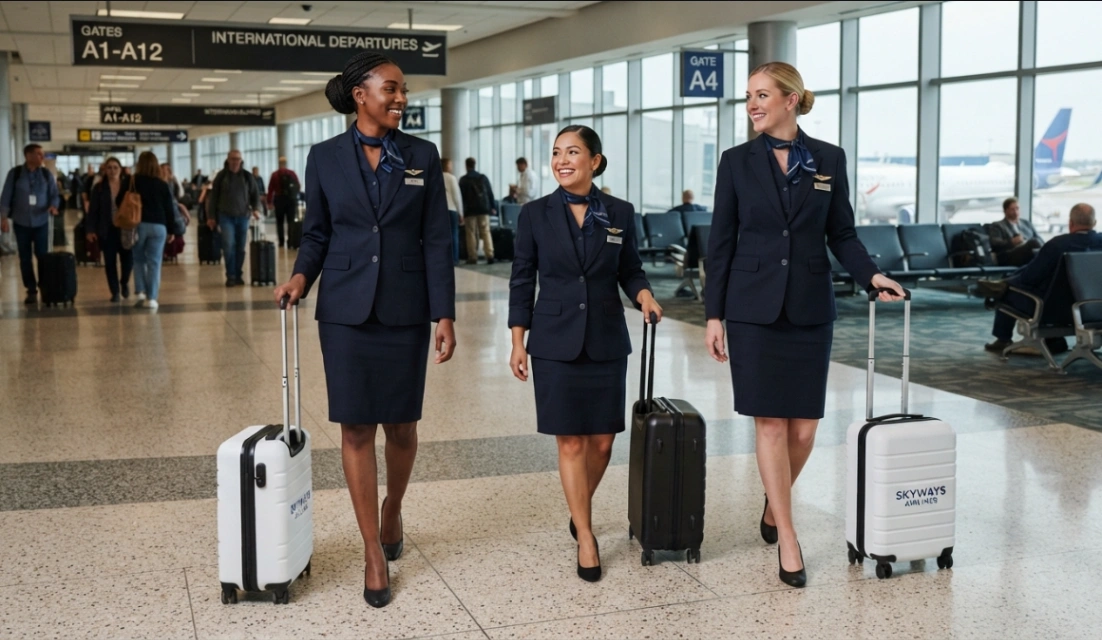
Can I be a flight attendant if I'm short? Sure, you can! Maybe becoming a flight attendant has been your dream for years.
You have pictured yourself in the uniform, walking through the cabin, helping passengers, traveling to places you have only seen in pictures. Maybe every time you see a flight attendant at the airport, you think, “I wish that could be me.”
But then you look at your height.
You are short. And somewhere along the way, you started telling yourself that the dream probably belongs to someone taller.
Maybe you have never even applied because you are afraid of being rejected before you get the chance to show what you can do. That can hurt in a very quiet way. You are not failing—you are simply talking yourself out of trying.
Please don't do that just yet.
Being short does not automatically mean you cannot become a flight attendant. Airlines have different requirements. And where height matters, it is often because you need to be able to perform specific safety-related tasks—not because you need to look tall in the uniform.
So before you close the door on something you really want, let's look at what airlines actually require and where height truly matters.
Airlines are not all looking for a specific height
There is no single height requirement that applies to every airline.
Some airlines do publish a minimum height or a reach requirement. Others focus almost entirely on whether you can physically perform the tasks required of a flight attendant.
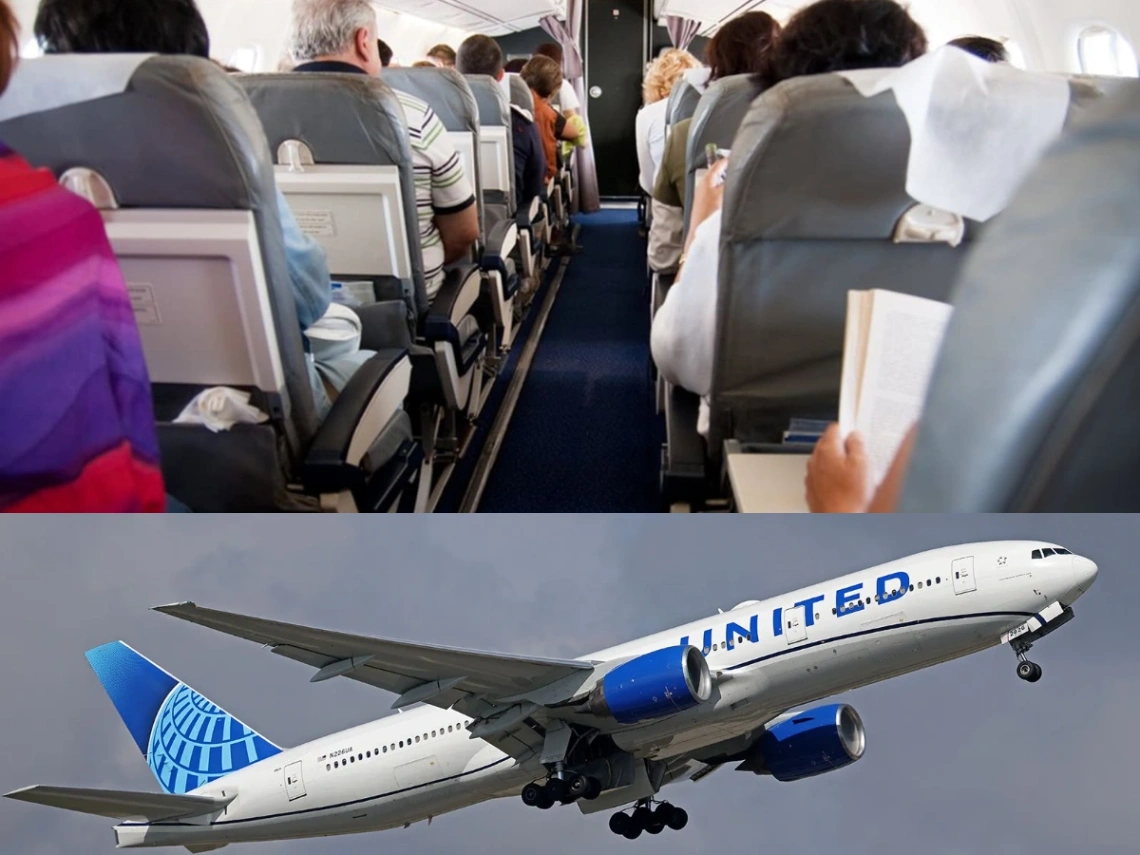
United Airlines is a great example.
United's current flight attendant requirements do not specify a minimum height. Instead, candidates must possess the ability to "pass a functional reach assessment with a combined 76-inch vertical and 43.5- inch horizontal reach and hold (simultaneous), without shoes on, in order to reach and operate all necessary equipment, machinery, and doors."
It also says there is no weight requirement. That is a very different question from simply asking whether you are 5'1", 5'2" or 5'3". In essence, United is asking: Can you reach what you need to reach? And that is what I want short aspiring flight attendants to pay attention to.
Your reach can matter more than your height
Think about what a flight attendant actually has to do.
You may need to reach overhead equipment, operate doors, retrieve items, assist passengers and handle equipment stored above you. United specifically lists the ability to stand, walk, kneel, bend, stoop, stretch, reach and lift heavy objects such as luggage to an overhead bin or a window exit.
So being short is not necessarily the problem.
Not being able to reach what the airline requires can be the problem.
That is why you should never assume that your height automatically eliminates you from consideration.
The requirements can differ significantly from one airline to another.
Alaska Airlines, for example, currently requires flight-attendant applicants to reach 82 vertical inches while standing on their toes without shoes, which the airline says is approximately 5'2" in height.
So if you are 5'1", that does not mean you should simply conclude, “I'm too short.”
You need to look at the airline you actually want to work for and find out what its current test requires.
What about reaching the overhead bins?
This is probably the question you were thinking about.
How can I be a flight attendant if I can't comfortably reach every overhead bin?
It is a fair concern.
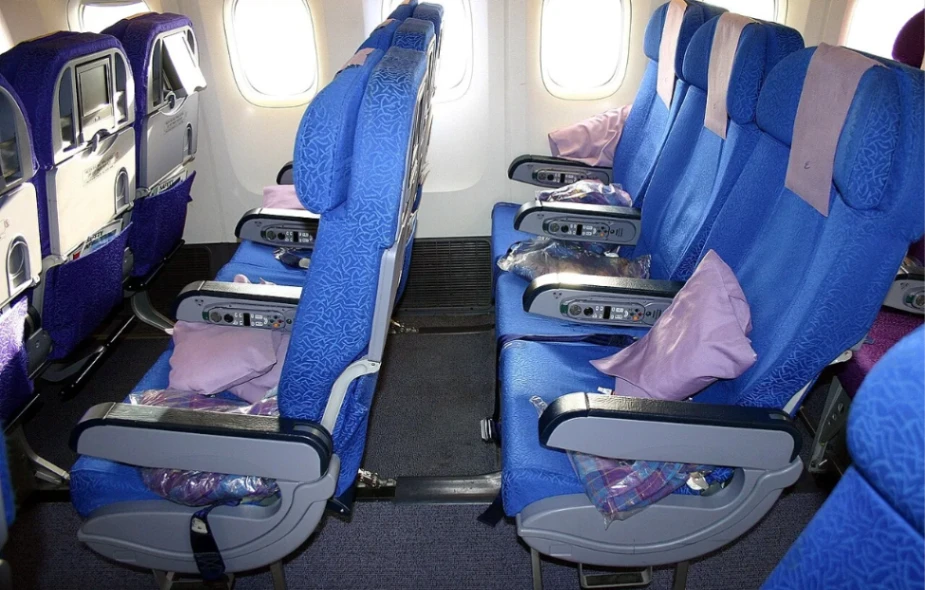
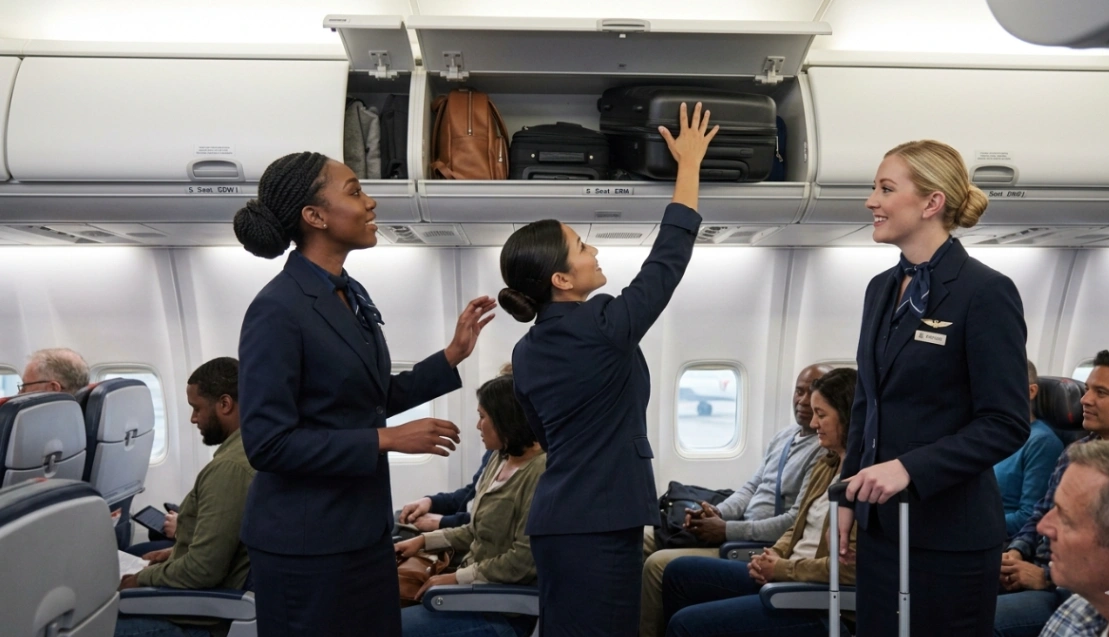
Commercial aircraft do not all have identical cabin interiors. The position and design of overhead compartments can vary between aircraft models and cabin configurations. Some bins sit higher than others, while some modern designs use mechanisms that bring part of the bin downward when it is opened.
But remember what we established above.
You are not being hired simply because you can reach the bottom of a passenger's suitcase compartment.
You are being assessed on whether you can perform the duties the airline requires.
That can include reaching emergency equipment and operating doors and other equipment—not just helping someone put a carry-on into the bin.
United's reach assessment exists for precisely this reason.
So don't stand in your kitchen, look at your ceiling and decide that your career is over because you cannot comfortably reach the highest cupboard.
The airline's test is what matters.
There are already short flight attendants doing the job
Sometimes you need to see someone doing the thing you are afraid you cannot do.
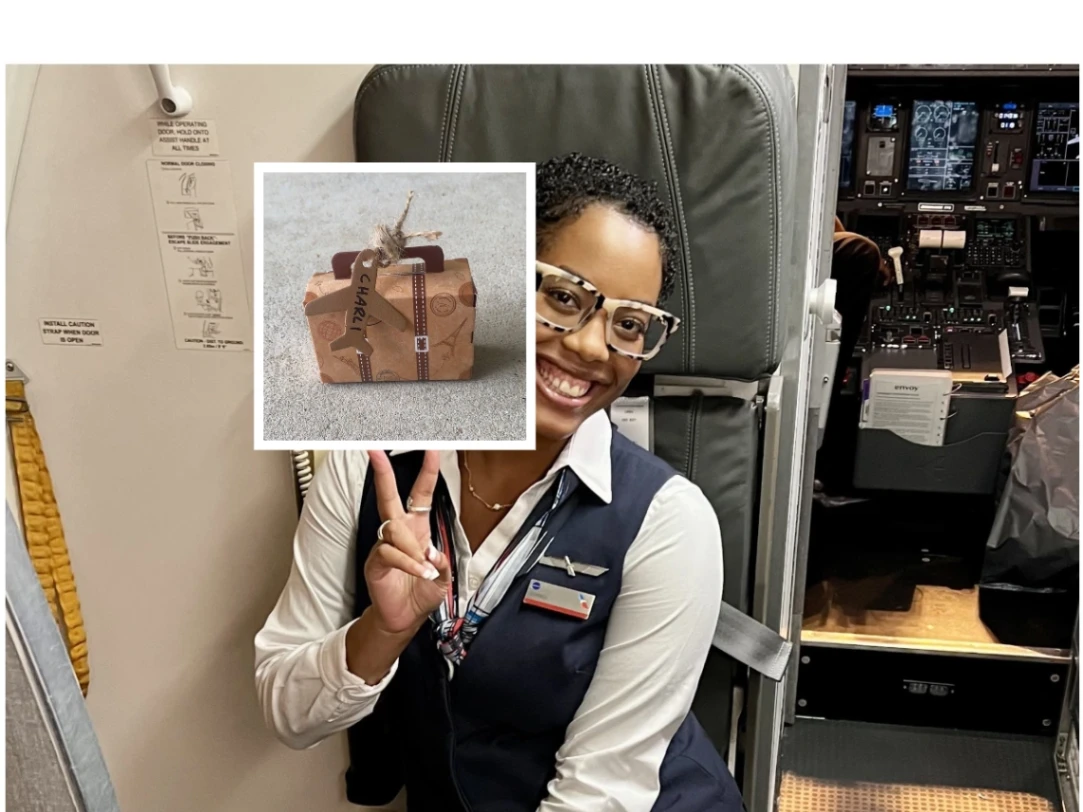
Kat Nesbitt, an American Airlines flight attendant and online creator, who stands at around 5 feet tall, has addressed this exact concern from aspiring flight attendants.
After a follower, who had the same doubt as you, asked: "So you're 5 ft tall and you're tall enough to be a mainline flight attendant? Because I'm 5' 1" and I wasn't sure if I'm tall enough," Nesbitt responded:
"Yes ma’am! You just have to be able to pass a reach test which is usually something like reaching emergency equipment from the overhead bin."
That is probably the simplest answer to this entire article.
Reach the required equipment. Pass the test. Do the job.
Nesbitt has also jokingly described herself with the caption, “What I lack in height I make up for in sass,” while posting about her life as a flight attendant.
I actually like that because it puts the whole height issue into perspective.
You can be petite and still be a flight attendant.
How high are the overhead bins?
Here is where your aircraft knowledge becomes useful.
Not every airplane puts its overhead bins at the same height. The aircraft model and cabin design can make a noticeable difference, and some modern bins are designed to move downward when opened.
Based on the typical measurements in the aircraft information reviewed for this article, here is a rough comparison of the opened-bin height:
Aircraft | Approx. floor-to-bin height | What it means for a shorter flight attendant |
|---|---|---|
Airbus A320/A321 | 68–71 inches (1.72–1.80 m) | Generally more manageable |
Airbus A350 | 70–72 inches (1.78–1.83 m) | Relatively manageable because of the lower pivoting bins |
Boeing 737 | 70–75 inches (1.78–1.91 m) | Moderate reach; newer Space Bins can sit lower |
Boeing 777 | 71–78 inches (1.80–1.98 m) | Depends on the cabin configuration |
Boeing 787 | 74–78 inches (1.88–1.98 m) | Can be more challenging for shorter crew members |
These are not universal measurements for every aircraft. Airlines can have different cabin interiors. Plus, overhead-bin designs can vary even on the same aircraft family.
The interesting thing is that Airbus and Boeing can feel quite different to a shorter person. Some Airbus designs use large pivoting bins that come downward when opened. Whereas some Boeing configurations place the bins higher in the ceiling.
Try this at home
And here is a simple exercise I would actually recommend before you apply.
Find the airline you want to work for and find out which aircraft you are most likely to work on. Look up the approximate floor-to-bin height for that aircraft, then mark that height on a wall at home with masking tape.
Now place a light object on the floor and practice picking it up and moving it to that marked height. Do it several times while standing normally and then while stretching upward.
Don't stand on a chair or anything unstable. The point is not to pretend you are taller. It is to get a realistic idea of what that movement feels like and whether you can comfortably control an object at that height.
For an even better test, use a tape mark for the reach requirement of the airline you are applying to. United, for example, requires a 76-inch vertical reach as part of its functional reach assessment.
This is not an official pass-or-fail test. It is simply a practical way to stop guessing about your height and start testing your actual reach.
And that is really the point. You do not need to be tall enough to look like a flight attendant. You need to be able to do the job safely.
Which airlines are best for a shorter flight attendant?
Height matters more on some planes than others. Overhead bins sit higher on certain aircraft. And you'll close hundreds of them over a career. So the airline you pick, and the fleet you fly, changes how your shoulders feel at the end of a trip.
The general rule is simple. Airbus jets tend to be friendlier to shorter crew. Boeing 737s tend to be the toughest. Here's how the airlines stack up.
Airlines with mostly airbus fleets
If you want to spend most of your career on reachable bins, start here.
JetBlue: Its mainline fleet is almost entirely Airbus (A320, A321 and A220). No Boeing jets, which means very few high bins to fight with.
Frontier: A 100% Airbus fleet, mostly A320 and A321 models.
Hawaiian Airlines: It leans on the A321neo for domestic flying and the A330 on long-haul routes. Those bins are easier to reach than the ones on Boeing widebodies.
IndiGo: If you're open to working abroad, this is one of the world's largest airlines and runs a nearly all-Airbus narrow-body fleet.
Air Transat: This Canadian carrier flies only Airbus.
The big three: it depends on your fleet
Network carriers fly a mix of aircraft. Your daily experience comes down to which fleet you bid for at your base.
Delta: The most Airbus-friendly of the big three. It's the largest operator of the A321 in the world and flies the A330 and A350 on most international routes. If you're short, bid heavily for Airbus lines.
American: The fleet splits down the middle. Domestic flying on A319, A320 and A321 jets is manageable. But every long-haul widebody is a Boeing (777 or 787), so international trips mean higher bins.
United: Roughly 77% of the fleet is Boeing, and every international long-haul route runs on a 777 or 787. Historically, this is the toughest fleet for shorter crew.
Airlines to think twice about
Southwest: A 100% Boeing 737 fleet. There's no Airbus line to switch to, so you'll reach over seats to close 737 bins for your entire career.
WestJet: Canada's second-largest airline flies an all-Boeing mainline fleet, so the same problem applies.
Not every base flies the same planes. An airline with plenty of Boeings may still run mostly Airbus out of certain cities, Boston and New York for example. Before you apply, look up which aircraft dominate at each base. Picking the right base can save your back and shoulders years of strain.
Being short does not make you less capable
This is the part I really want you to remember.
Height is one physical characteristic. It does not tell me whether you can communicate with passengers, remain calm during an emergency, work with a crew, follow procedures, provide excellent service or handle a difficult situation at 35,000 feet.
Those are the things that make someone good at this job.
And being short can come with its own practical challenges. You may have to stretch more. You may need to work a little differently when reaching something overhead. You may have to be more deliberate about how you position yourself.
That's okay.
The same job presents different challenges to different people.
The airline's responsibility is to determine whether you can safely perform the required duties. Your responsibility is not to reject yourself before you ever take the test.
Don't let your height answer the question for you
If you are 5'0", 5'1", 5'2" or simply shorter than the flight attendants you normally see, I don't want you looking at this career and deciding that it belongs to somebody else.
Check the requirements.
Measure your reach.
Take the assessment.
Then let the airline make the decision.
You might discover that you were never too short in the first place—you were simply measuring yourself against the wrong standard.
And while you're thinking about whether you have what it takes to become cabin crew, you may also want to read my article “You Don't Have to Look Pretty to Be a Flight Attendant.” Height and appearance are two things many aspiring flight attendants worry about before they even apply. In both cases, the actual airline requirements may be very different from what you have imagined.
Don't count yourself out because of something as simple as the number on a measuring tape.