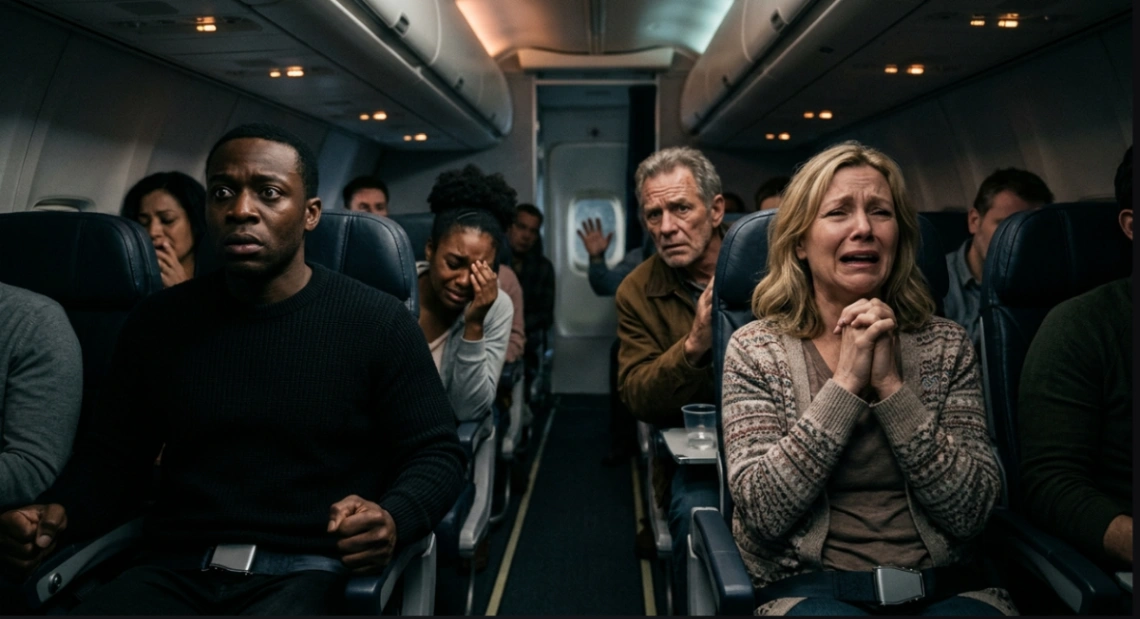
“I just assume every time I get on a plane that’s the day I’ll die. That way there’s no surprise.”
One nervous flyer wrote that in a comment. It might be the most honest sentence ever written about turbulence. It’s also a sentence that shows how heavy fear can get.
Here’s what the person writing it may not know. The flight attendant pouring coffee two rows ahead feels every bump you feel. As flight attendant Maria, who has worked the cabin for almost 12 years, puts it:
“We’re feeling the same bumps you are.” The difference isn’t what they feel. It’s what they know.
That gap is what this article is about. I gathered advice from people who spend their working lives in the air: Sille Rydell, a flight attendant and digital creator with over 35,000 followers on Instagram; Bryce Petersen, an airline instructor and pilot who helps nervous flyers turn anxiety into confidence; and Maria.
They answer the questions nervous flyers ask most. Why does my stomach drop? Why is the cockpit silent? Is the plane about to fall?
Below are 11 things they want you to know. They won’t promise you’ll enjoy turbulence. But they might help you stop fearing the wrong things.
1. Tell a Flight Attendant You're Afraid of Flying
You don't have to pretend you're comfortable when you board a plane. And you don't have to hide your fear from the cabin crew.
Sille Rydell, a flight attendant and travel content creator with more than 35,000 Instagram followers, says crew members often notice nervous passengers.
"We notice when you’re nervous, more often than you’d think, and we genuinely want to help."
Her advice is simple: tell a flight attendant you're afraid of flying. You don't need to wait until the aircraft starts shaking or until you're close to having a panic attack.
"Tell us you’re an afraid of flying when you board. You’re not a burden, and it makes it easier for us to look after you. No question is annoying. If something feels uncertain, just ask. That’s what we’re there for," says Rydell, adding: "A bumpy flight is a completely normal day for us. Planes are built to handle far more than anything you’ll ever experience. And if we look calm, it’s because everything is okay."
That last point is worth remembering. You may be experiencing your first frightening bout of turbulence. The crew may have experienced similar conditions hundreds of times.
And if you need reassurance, ask. You are not wasting anyone's time by explaining that you're nervous.
2. That Sudden Drop Doesn't Mean the Plane Is Falling
Few things frighten nervous flyers more than that sudden stomach-dropping sensation.
You're sitting comfortably, watching a movie or looking out the window. Then, without warning, the aircraft moves. Your stomach jumps. Your hands reach for the armrests.
Your first thought may be that the plane is falling.
But the sensation is not proof that it is.
Bryce Petersen, an airline instructor and pilot who helps people "help transform flight anxiety into confidence," explains why that movement can feel so frightening.
"That drop you feel? The one where your stomach jumps and you grab the armrest like it’s going to save you? That’s not the plane falling. It’s not even close to falling. It’s a normal shift in air pressure that your brain reads as danger because it doesn’t know any better."
He adds: "I feel it too. I just don’t panic, because I know what it actually is."
This is an important distinction. Your body can detect movement. It cannot reliably tell you whether that movement means the aircraft is in danger.
A sudden bump can feel dramatic without indicating an emergency. The sensation and the actual condition of the aircraft are two different things.
3. Pilots Usually Aren't Panicking When Turbulence Starts
One of the biggest fears nervous passengers have is that the pilots are struggling to control the aircraft while everyone in the cabin is being thrown around.
So what are they actually doing?
Petersen, who has more than 200,000 Instagram followers, says the answer is often much less dramatic than passengers imagine.
"What are us pilots actually thinking when turbulence starts? Usually… a lot less than you might think. While your brain might be thinking… “Is this getting worse?” “Are they worried up there?” “Is something wrong?” Up front, we’re typically just monitoring the ride, making adjustments if needed, and continuing to fly the airplane. Our biggest concern is making sure no one gets tossed around. (That’s where the seatbelt sign comes in). You’re feeling the movement. Pilots understand the context. And context changes everything."
Read that again. The pilots' biggest concern is making sure passengers and crew are not tossed around.
That is why you should take the seatbelt sign seriously. Even when the aircraft is flying normally, unexpected turbulence can catch an unbuckled passenger off guard.
You don't need to see the pilots doing something dramatic to know they are paying attention. Monitoring the aircraft and the conditions around it is part of their job.
4. Flight Attendants Can Feel the Same Turbulence Without Being Frightened
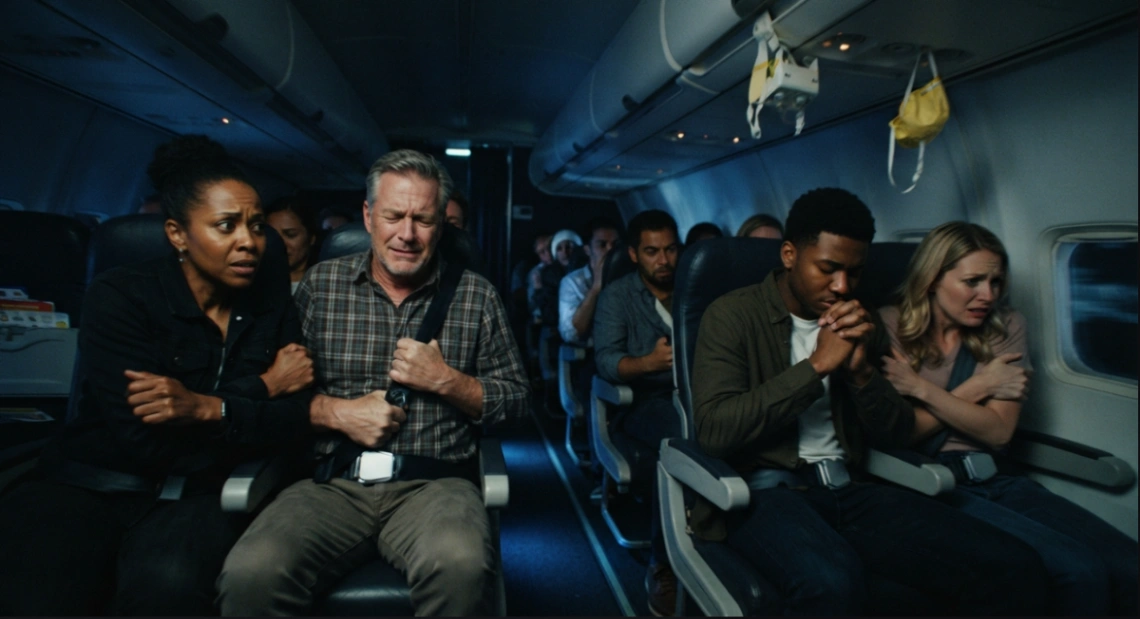
Have you ever looked at a flight attendant during turbulence and wondered why they seem so relaxed?
The aircraft is shaking. Your heart is racing. Yet the crew member nearby appears perfectly comfortable.
It can make you wonder whether they're feeling the same thing.
They are.
Maria, a flight attendant with almost 12 years of cabin experience helping nervous flyers, says nervous passengers ask her this question all the time.
"One thing I get asked by my nervous flyers on board (and also here, online) ALL the time: “Aren’t you scared when the plane hits turbulence?” As a flight attendant with almost 12 years of cabin experience, here’s my honest answer: No. We’re usually just carrying on with whatever we were doing – chatting, preparing the service, laughing, or serving drinks/snacks/meals – depending on the seatbelt sign obviously, because safety always comes first."
She explains why turbulence doesn't automatically frighten experienced crew members:
"We’ve experienced turbulence countless times."
"We know what it feels like, what’s normal, and that a few dramatic bumps don’t mean the aircraft is in danger. So next time you’re sitting there thinking, “OMG, this is REALLY bad” and you see us completely unfazed… remember: We’re feeling the same bumps you are. We just have a very different perspective on what they mean."
Their calmness doesn't mean they cannot feel the bumps. It means they have experience interpreting them.
Granted, flight attendants are not immune to turbulence. And they still have to follow safety procedures. They may stop serving, secure the cabin, or take their seats when conditions require it.
But seeing a crew member remain calm can help you put what you're feeling into perspective.
5. Don't Assume Something Is Wrong Because the Pilots Are Silent
The aircraft starts shaking. You look around. You wait for an announcement from the cockpit.
Nothing.
Now you're wondering: Why haven't the pilots said anything? Don't they know how bad this feels?
Maria says this is one of the questions nervous flyers ask her most often.
"Why don’t the pilots say anything when there’s turbulence?” "During my 12 years as a flight attendant, this is probably one of the questions I get asked most by nervous flyers. And I completely understand why. When the plane starts shaking and the pilots say… absolutely nothing, it can be tempting to think: “Umm… should I be worried?”
But silence doesn't automatically mean the pilots are ignoring the situation.
She explains:
"But here’s the thing: Silence from the cockpit does NOT mean something is wrong. When there’s turbulence, the pilots are busy flying the aircraft, monitoring the situation, talking to air traffic control and looking for ways to make the ride smoother. And there’s another reason they may not make an announcement: It could actually make people MORE nervous. Imagine your bus driver announcing every time you hit a pothole: “Hi everyone, just letting you know that we are currently driving over a bumpy section of road. Don’t worry, we’re perfectly safe.”
You’d probably think: “…Why are you telling me that?” Exactly. Turbulence is a normal part of flying. It doesn’t automatically require an announcement - and most passengers don’t need or want one every time the ride gets a little bumpy. So if you’re a nervous flyer, remember this: The pilots not saying anything is NOT a sign that they’re worried. It just means there’s nothing that needs to be said."
An announcement can be helpful, especially when passengers need information about what is happening. But pilots don't have to make one every time the aircraft encounters a bump.
Don't use cockpit silence as your personal danger signal. Listen to crew instructions, keep your seatbelt fastened, and allow the pilots to do their job.
6. Stop Bracing Your Body for Every Bump
When turbulence begins, your natural reaction may be to tense up. You grip the armrests. Your shoulders tighten. Your legs become stiff. You hold your breath and wait for the next movement.
Maria says she avoids doing this, even when travelling as a passenger.
"As a flight attendant with almost 12 years of cabin experience, I never do these 3 things when I travel as a passenger and turbulence hits. I don’t brace my body for every bump. Tensing your shoulders, gripping the armrests and stiffening your whole body can actually make every movement feel more intense. It also sends a wrong signal - “danger” - to your brain, making your fear worse."
Try to loosen your grip and relax your shoulders. Breathe slowly. Let your body settle into the seat instead of fighting every movement. You don't have to force yourself to feel completely comfortable. Just try not to make each bump a new reason to panic.
7. Don't Give Every Movement Your Attention
It's easy to become obsessed with turbulence once you notice it. You stop watching your movie. You stop reading. You listen for every unusual sound and monitor every movement. Even a small bump gets your full attention.
That can make the flight feel much longer and more frightening. Maria has another rule when she travels as a passenger:
"I don’t give the turbulence my attention. I keep doing what I was doing. Turbulence doesn’t need my focus - and neither should it have yours."
This doesn't mean ignoring safety instructions. If the crew tells you to return to your seat or fasten your seatbelt, do so immediately. But when you're seated and following instructions, you don't need to spend the entire flight monitoring every movement.
Put on a film. Listen to music. Read a book. Talk to someone travelling with you. Give your attention to something other than the bumps.
10 Reasons Not To Be Afraid of Flying
8. Keep Your Seatbelt Fastened Even When the Flight Feels Smooth
This is one piece of advice you should follow whether you're afraid of flying or not.
Maria says she never unbuckles her seatbelt simply because the aircraft appears to be flying smoothly.
"I don’t unbuckle my seatbelt. Quite the opposite. I keep it loosely fastened whenever I’m seated, even when the ride feels completely smooth."
Why?
Because turbulence can occur unexpectedly. You may not have enough warning to fasten your belt before the aircraft moves.
A loosely fastened seatbelt allows you to sit comfortably while keeping you secured in your seat. It is a simple precaution that can reduce your risk of being injured.
Maria warns that panicking, tensing up, or leaving your seatbelt unfastened can make the experience worse.
"Because if you’re scared of turbulence and start tensing your body, panicking or leave your seatbelt unbuckled, you can make the experience for yourself much worse than it needs to be! Turbulence is a normal part of flying and a normal part of my job - just like bumps in the road are probably a normal part of your commute."
Keep your belt fastened whenever you're seated. And when the seatbelt sign comes on, follow the crew's instructions.
9. Turbulence Does Not Automatically Shut Down the Engines or Stop the Plane From Flying
Your anxious brain can come up with some frightening explanations for what is happening.
Perhaps the engines have stopped working. Maybe the wings have lost their lift. Perhaps the aircraft is about to drop out of the sky.
These thoughts can feel convincing when you're already scared. But they are not accurate descriptions of how turbulence works.
Petersen addresses several common fears:
Fear: Turbulence can shut the engines down.
"No. The engines are still doing exactly what they’re designed to do. Turbulence doesn’t make them switch off - it’s not how turbulence works!"
Fear: Turbulence can make the airplane stop flying.
"No. The wings keep generating lift. Turbulence doesn’t switch that off."
Fear: Turbulence can make the plane drop out of the sky.
"No. That stomach-drop feeling is your body reacting to movement. The plane is moving with the air, not falling through empty space."
Fear: Turbulence can make the plane lose all its lift.
"No. Bumpy air doesn’t make lift disappear. The wings keep flying the aircraft through it."
The important thing to understand is that an aircraft does not stop functioning as an airplane simply because the air around it is moving.
Turbulence changes the aircraft's movement. It does not automatically switch off the systems that keep it flying.
10. Turbulence Does Not Mean the Pilots Have Lost Control
Another frightening thought is that the pilots might be unable to control the aircraft once the shaking becomes intense.
Petersen addresses that fear too:
Fear: Turbulence can make pilots lose control.
"No. The aircraft remains controllable, and pilots are trained for turbulence."
Fear: Turbulence can make the plane tip over.
"No. Airplanes are designed to roll, pitch and yaw as they respond to moving air."
Fear: Turbulence can make the wings break.
"No. Wings are designed to flex and handle loads far beyond normal turbulence."
Fear: Turbulence can make the doors fly open.
"No. They’re mechanically secured, and cabin pressure keeps them closed."
These explanations matter because nervous flyers often interpret movement as a loss of control.
An aircraft can move, roll, pitch, and shake in turbulent air without that movement meaning the pilots have lost control.
And those wings are not supposed to remain rigid. Their ability to flex is part of their design.
11. How Scary Turbulence Feels Does Not Tell You How Dangerous It Is
This may be the most important point for anyone who struggles with flight anxiety.
You can experience a frightening bump and immediately assume the aircraft is in serious trouble. You may look at other passengers, search the flight attendants' faces, or wonder why the pilots aren't doing anything.
But your fear is not a reliable measure of the aircraft's condition.
Petersen puts it this way:
Fear: How scary turbulence feels tells you how dangerous it is.
"No. Your body feels movement intensely, but it can’t tell you whether that movement is dangerous."
That distinction can help you respond differently the next time the aircraft encounters rough air.
You don't have to convince yourself that turbulence feels pleasant. It doesn't. You may still feel uncomfortable, nervous, or frightened.
But you can remind yourself that an unpleasant sensation is not automatically a sign of danger.
There is one qualification. Turbulence is not harmless in every respect. Severe turbulence can injure passengers and crew, particularly when people are standing or not wearing seatbelts. That's why the crew takes it seriously, why service may stop. And why you should remain seated with your seatbelt fastened whenever possible.
"While turbulence is normal and happens often, it can be dangerous," says the Federal Aviation Administration (FAA), adding that "its bumpy ride can cause passengers who are not wearing their seat belts to be thrown from their seats without warning."
The goal isn't to ignore turbulence. It's to understand what it means, follow safety instructions, and stop treating every bump as evidence that something terrible is happening.
Final Thoughts
Most of what scares us in turbulence isn’t the bump. It’s the story our brain tells about it.
Bryce Petersen said it simply: “Context changes everything.” The same drop feels like falling when you don’t understand it. And like a pothole when you do. Your body is excellent at telling you how intense a movement is. It can’t tell you whether that movement is dangerous. That’s a job for knowledge.
So here’s what the people who fly for a living would want you to carry off the plane.
Tell someone. Sille Rydell says flight attendants notice nervous flyers more often than you’d think. Tell the crew when you board. You’re not a burden, and no question is annoying.
Read calm correctly. A relaxed crew isn’t indifference. A silent cockpit isn’t alarm. They’re doing their jobs, and as Maria says, nothing needs to be said.
Don’t fight the air. Bracing every muscle and gripping the armrests tells your brain the danger is real. Relax your shoulders. Give the bumps less of your attention.
Keep your seatbelt on. This is the one place to be serious. Turbulence is normal, but severe turbulence can injure people, which is why the seatbelt matters. Fasten it loosely whenever you’re seated, even when the ride is smooth.
The fear may never vanish completely. That’s okay. The goal isn’t a mind without fear. It’s a mind that knows what it’s afraid of, and what it doesn’t need to be.
Next time the cabin shakes, look at the person walking the aisle. Their calm isn’t a performance. It’s experience. And you’re allowed to borrow it.