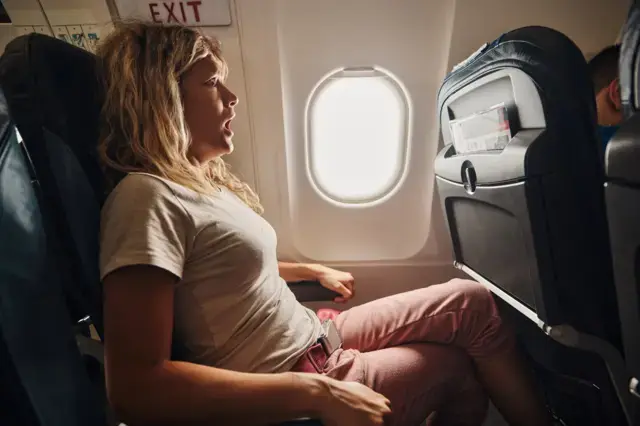
The cabin door closes. The engines get louder. The aircraft picks up speed down the runway. And somewhere in the back of your mind: what if something goes wrong?
Type "is flying a scary thing" into Google and you'll find you're far from alone in wondering. Search "how can I get over the fear of flying" and you'll find no shortage of advice, most of it either too clinical or too dismissive to actually help. And if you've ever asked yourself what the root cause of your fear of flying even is, the honest answer is that it's rarely about the plane itself.
That fear is real. It's common. And it doesn't make you irrational.
Here's the thing worth understanding, though.
Fear of Flying Is Usually About Uncertainty
Flying can feel dangerous without actually being dangerous. Most of the sensations that spike anxiety mid-flight, the shaking, the noises, the sudden shifts, have ordinary explanations rooted in how aircraft are built and operated. This isn't going to be another article telling you to relax because "statistically you're safer in a plane than a car." You've heard that. It hasn't worked. Instead, this is about explaining what's actually happening when your body tells you something's wrong, so the next time it happens, you have an answer instead of a spiral.
1. Commercial Aviation Is Built Around Layers of Safety
A flight doesn't depend on one person, one part or one decision going perfectly. It depends on dozens of overlapping systems, any one of which can catch a problem before it becomes serious.
That includes pilot training and recurring proficiency checks. Scheduled aircraft maintenance. Air traffic control monitoring every movement in the sky. Dispatchers building and adjusting flight plans before departure.
Weather forecasting teams tracking conditions along the route. Airport safety systems. A certification process aircraft must pass before they ever carry a paying passenger. Cabin crew trained specifically for emergencies. Checklists for nearly every phase of flight.
What happens if one thing goes wrong? Aviation safety is designed around the assumption that individual components, decisions or procedures can fail. That's not a flaw in the system. It's the starting premise. Multiple independent layers sit between any single failure and a catastrophic outcome. Which is exactly why isolated problems so rarely become headlines.
2. Turbulence Feels Terrifying, But It Doesn't Mean the Plane Is Falling
If there's one sensation that sends nervous flyers into a spiral, it's turbulence. The plane jolts. It shakes. Sometimes it feels like a sudden drop.
Turbulence is air movement. Nothing more exotic than that. Pockets of shifting air, temperature changes, or air flowing over mountains and weather systems can cause the aircraft to bump, sometimes even when the sky looks completely clear. The wings flexing during turbulence isn't cause for alarm. It's the aircraft responding normally to changing air pressure. Pilots may adjust altitude or reroute slightly to find smoother air, not because anything is wrong. But because it's more comfortable for everyone onboard.
Let's be honest here: turbulence isn't harmless. "While turbulence is normal and happens often, it can be dangerous," says the Federal Aviation Administration (FAA). The FAA is clear that the real risk during turbulence is injury to passengers who aren't wearing their seat belt, not the aircraft losing control. That's exactly why the seat-belt sign matters, even when the skies look calm.
What you feel | What's actually happening | |
|---|---|---|
Sudden drop | Change in vertical acceleration | |
Shaking | Irregular air movement | |
Wing movement | Aircraft responding to aerodynamic forces | |
Engine sound changes | Normal changes in thrust and power | |
Seat-belt sign turns on | Crew managing potential turbulence ahead |
3. Airplanes Are Designed to Handle Far More Than Normal Flight Conditions
It's not that airplanes are "strong" in some vague sense. It's that they're engineered with enormous safety margins built in on purpose.
Aircraft go through extensive structural testing before they're certified to fly, testing that pushes them well beyond anything they'll encounter in normal service. Wings are designed to flex, dramatically, because rigid wings would be far more likely to fail under stress. Pressurization systems, hydraulics and flight controls are built with redundancy, meaning backups exist for the backups.
Why don't the wings snap off? Because flexibility is the design goal. Not a warning sign. A wing that doesn't move is the anomaly. Not the one that does.
4. The Sounds You Hear During a Flight Usually Have an Explanation
A lot of in-flight fear comes down to unfamiliar noise. Here's what's actually behind some of the most common ones:
Loud engine roar during takeoff — the engines are producing maximum thrust to get a heavy aircraft airborne quickly
Engine sound changing shortly after takeoff — pilots reduce thrust once the aircraft reaches a safe climb speed, a normal procedure, not a problem
Clunks after takeoff — the landing gear retracting into the fuselage
Whirring near the wings — flaps extending or retracting to change how the wings generate lift
Cabin clicks and creaks — normal flexing of the aircraft structure and interior fittings
Engine spooling up during descent — small thrust adjustments to control speed and altitude
Loud reverse thrust after landing — engines redirecting airflow forward to help slow the aircraft down on the runway
None of these sounds mean something's broken. Most of them mean the aircraft is doing exactly what it's supposed to be doing, at exactly the point in the flight where you'd expect to hear them.
5. Pilots Aren't Just "Driving a Plane"
The mental image a lot of people have of a pilot is somewhat like a bus driver with better lighting. That undersells what the job actually involves.
Airline pilots train constantly. Not just once. Recurring simulator sessions test them on emergencies they'll likely never face in real life, engine failures, rejected takeoffs, system malfunctions, so the response becomes automatic if it's ever needed. Crew resource management training specifically focuses on communication between pilots, so decisions get made collaboratively rather than by one person under pressure. Behind the scenes, dispatchers and ground teams are feeding pilots real-time information throughout the flight.
Here's something worth knowing: pilots often sound completely calm during moments that feel dramatic to passengers. That is not because they're hiding something. But because what feels intense in the cabin is frequently a routine operational adjustment from the flight deck's perspective. Passenger perception and operational significance aren't always the same thing.
6. Modern Flights Are Constantly Being Monitored and Adjusted
A flight isn't just an aircraft moving through empty sky. It's a continuously updated operation, with information flowing in from multiple directions the entire time.
Weather data. Air traffic control instructions. Pilot reports from aircraft already in the air. Live turbulence data. They all feed into decisions made mid-flight. The International Air Transport Association (IATA)'s Turbulence Aware system, for example, aggregates real-time turbulence reports across participating airlines, so pilots elsewhere can adjust routes before their passengers ever feel the bump.
When a pilot discovers unexpected weather ahead, it's rarely a scramble. It's typically a matter of consulting updated data, communicating with air traffic control, and making a calm, informed adjustment, sometimes minutes before passengers even notice anything's changed.
7. Takeoff and Landing Feel Dangerous Because Your Body Notices Them More
Takeoff and landing are, understandably, the two moments most anxious flyers dread. Physiologically, that tracks. Our body is built to notice sudden acceleration, tilting and rapid changes in speed, because in most everyday contexts, those sensations would signal something worth paying attention to.
Acceleration down the runway feels intense because it is intense. An aircraft going from a standstill to over 150 mph in under a minute. The nose rising. The ground dropping away quickly. The noticeable braking after touchdown. None of that is subtle. But intensity isn't the same as danger. A sensation can feel dramatic and still represent completely normal aircraft operation. Your inner ear doesn't know the difference between "something's wrong" and "this is how takeoff always feels." It just reports the sensation. Interpreting it is on you.
That climb-out you feel leaving LaGuardia or the steady descent into Denver International is the same sequence pilots run through thousands of times a week, not a departure from the norm.
8. Our Brain Is Very Good at Turning Uncertainty Into Danger
This is where fear of flying gets less about the aircraft and more about how our brains process risk.
Lack of control is one of the most commonly cited triggers. One flyer put it simply: "It's the lack of control that scares me." Another described it as "the lack of ability to escape or tap out" during a panic moment.
That feeling, of being unable to intervene or leave, activates a threat response regardless of the actual statistical risk involved.
Then there's the information gap. As one Reddit user described it, having "zero control and very little knowledge about why the plane does X or Y" makes ordinary events, like turbulence or a go-around, feel far more alarming than they are.
Someone else summed up a different angle entirely: being "largely afraid of my own fear," where the anxiety itself, not the flight, becomes the thing to dread.
Your brain doesn't calculate risk the way a safety engineer does. "Fear is about perception. It's not what is happening," says Allison P. Davis, a writer for The Cut, in her article "I fixed my fear of flying by embracing something worse." A rare, dramatic aviation event gets enormous media coverage. Millions of ordinary, uneventful flights get none at all. That imbalance shapes perception, even though it has nothing to do with actual probability. Media visibility and statistical likelihood are not the same measurement, even though your brain tends to treat them as if they are.
9. You Don't Need to Pretend Flying Is Risk-Free
Aviation isn't risk-free. Nobody credible claims it is.
Turbulence can and does injure people, almost always those who weren't buckled in. Mechanical issues happen. And when they do, they're usually caught and resolved through the layered systems described earlier. Weather causes diversions and delays regularly. And while extremely rare, accidents do happen.
IATA's 2025 Annual Safety Report makes this exact distinction. Global aviation safety performance remains strong, with long-term accident rates continuing to decline overall. But the report also flagged an increase in fatal accidents and onboard fatalities for the year, driven by a small number of high-severity events, a reminder that risk in aviation is increasingly concentrated in rare, high-consequence incidents rather than widespread systemic failure. Notably, the report found zero loss-of-control in-flight accidents, a milestone reflecting real progress on what used to be one of the industry's most dangerous failure modes. Most operational risk now clusters around takeoff, landing and ground operations, runway excursions and ground damage being the most frequent categories. Which is exactly why so much investment continues to go into airport infrastructure and runway safety.
The goal was never zero risk. It's controlled risk, continuously measured and continuously reduced. That's a far more credible claim than "there's nothing to worry about," and it happens to be true.
10. You Can Make Your Next Flight Feel More Predictable
Understanding the aviation side only goes so far. Here's what you can actually do differently on your next flight.
Before the flight:
Learn what turbulence actually is, so it stops being a mystery mid-air
Skip the accident videos and forums the night before you fly
Arrive early enough that rushing doesn't add to your stress
Choose an aisle seat if feeling boxed in triggers anxiety
Tell the airline ahead of time if your anxiety is significant, many have specific accommodations
During boarding:
Take a moment to look around the cabin
Note where the nearest exits are, the FAA specifically recommends this
Actually listen to the safety briefing instead of tuning it out
During turbulence:
Keep your seat belt fastened, always
Remind yourself that a bump isn't automatically an emergency
Follow crew instructions without over-analyzing them
Stay in your seat rather than moving around the cabin
During takeoff:
Expect the engine noise to build steadily
Expect real acceleration, that's not unusual, that's the point
Expect the nose to rise and the sound to shift shortly after liftoff
During landing:
Expect flap and landing gear noises as the aircraft configures for approach
Expect engine sound changes throughout the descent
Expect noticeable braking and reverse thrust right after touchdown, that's the aircraft doing exactly what it's supposed to
You Don't Have to Love Flying to Feel Safe Flying
You don't need to convince yourself flying is completely risk-free. You don't need to enjoy turbulence. You don't need to stop feeling nervous the moment the cabin door closes.
What actually helps is smaller than that. Understanding what's happening doesn't erase every anxious thought, but it makes the experience less mysterious. That's the real goal here, not eliminating fear entirely. But replacing "I don't know what's happening" with "I understand what this is."
The next time an airplane makes a noise, shifts unexpectedly or changes speed mid-flight, your first thought doesn't have to be that something's wrong. It can just as easily be: I know exactly what this is.