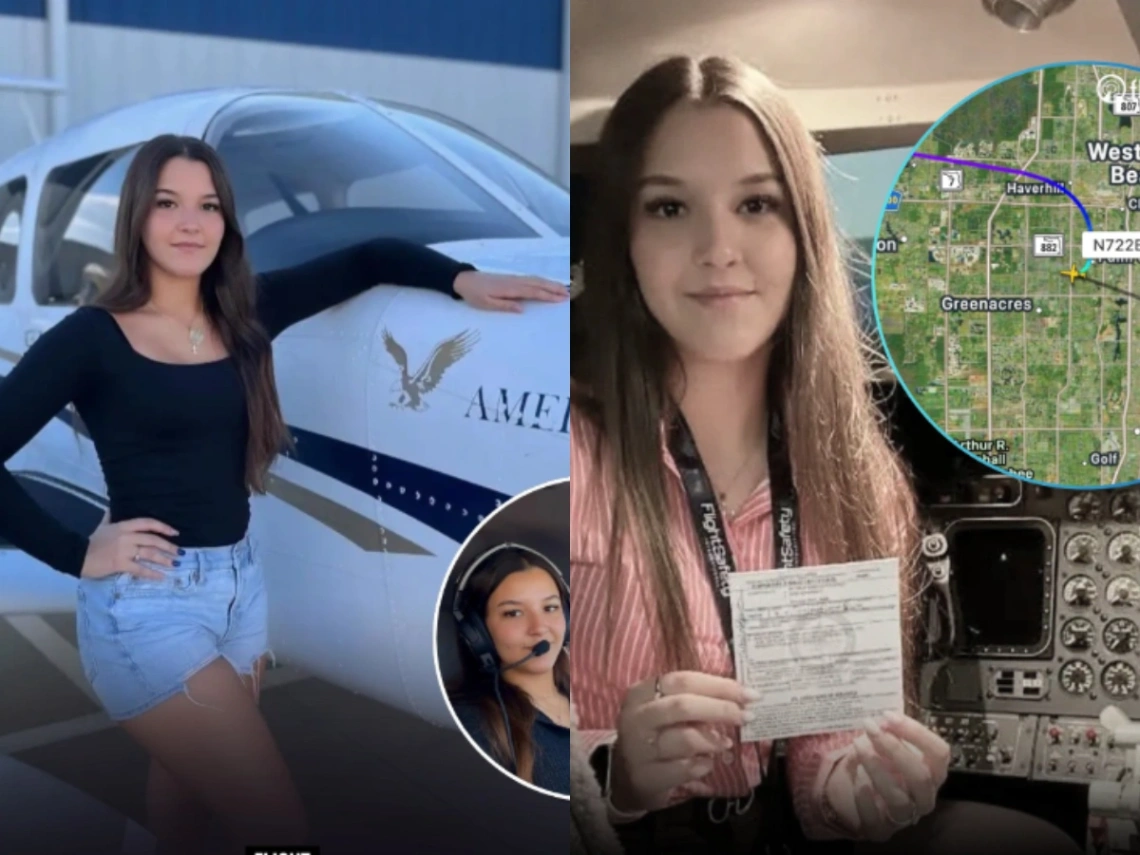
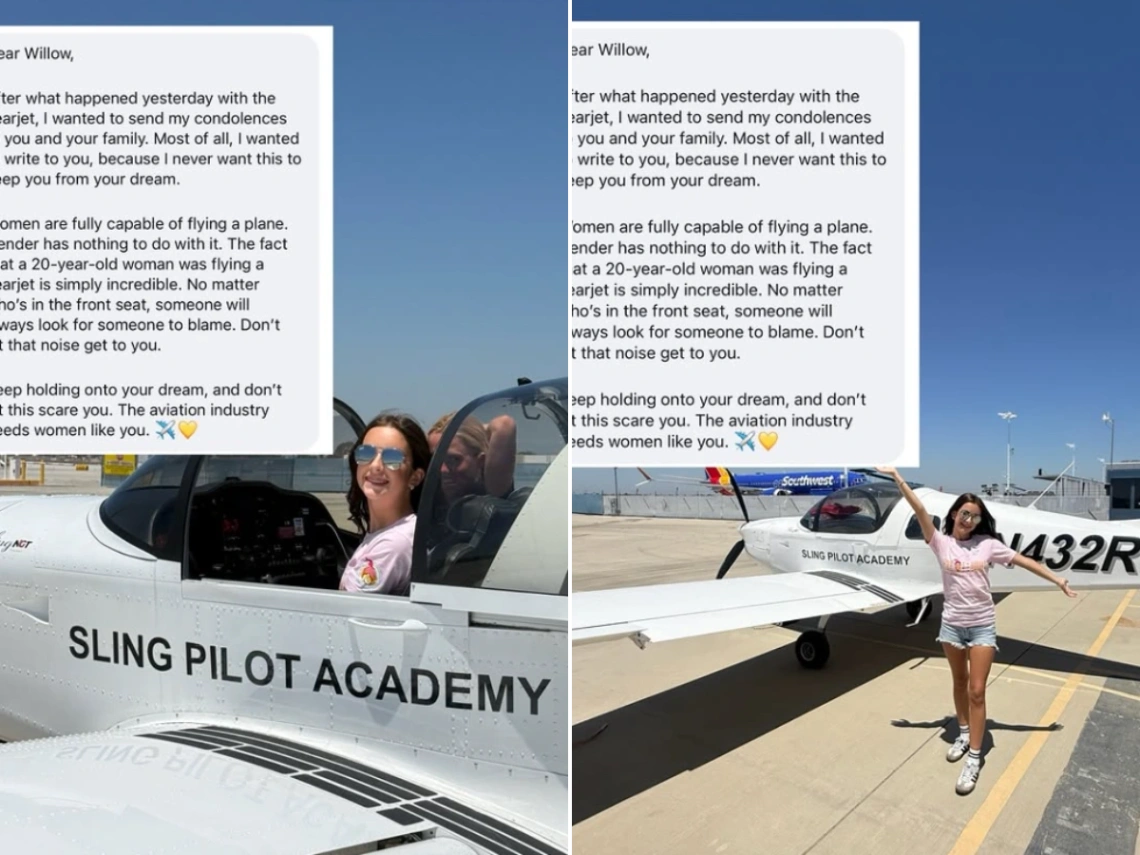
Following the tragic death of Nathalia Filgueiras, a young pilot opened a message that began, “Dear Willow.”
It came from a stranger, sent the day after a Learjet fell from the sky over Palm Beach County and killed all nine people aboard, including its 20-year-old co-pilot, Nathalia Filgueiras. “I never want this to keep you from your dream,” the writer told her.
Willow is a student pilot at Sling Pilot Academy in Torrance, California. She had done nothing except keep learning to fly. But the crash had already turned into an argument online. Strangers were debating whether someone so young belonged in that seat. Some made it about gender too.
Here’s what got lost in the noise: nobody yet knows why the jet went down. The NTSB is investigating. Authorities haven’t published Filgueiras’s qualifications, her experience or her exact duties on that flight.
So this isn’t an article about the crash. It’s about what happens in the days after one. A grieving community, a wave of certainty with no facts behind it and a stranger who wrote a letter to say “don’t let this scare you.”
I think what they said, and what we say back, is worth a closer look.
Nathalia Filgueiras’ Death Sparks Debate Over Young Women in the Cockpit — But Willow Is Being Urged to Keep Flying
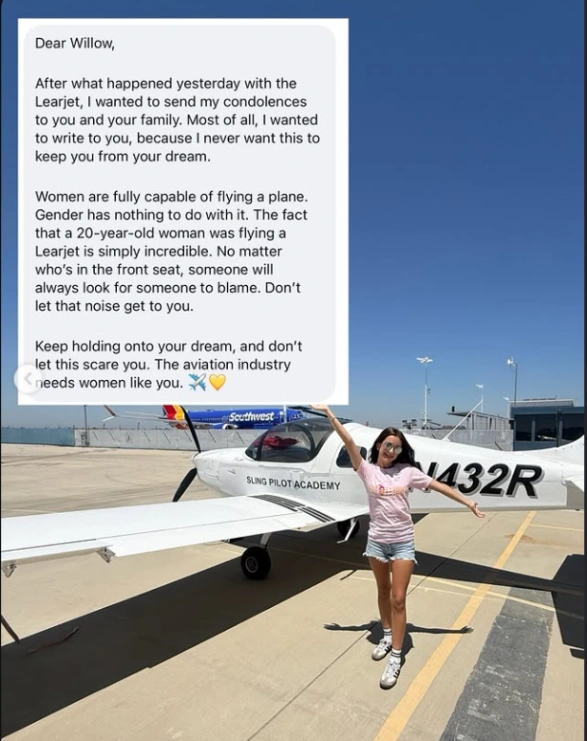
Willow received a heartfelt message following the Learjet accident. The sender offered condolences to her and her family, but also wanted to make sure the incident did not discourage her from becoming a pilot.
The message read:
"Dear Willow,"
"After what happened yesterday with the Learjet, I wanted to send my condolences to you and your family. Most of all, I wanted to write to you, because I never want this to keep you from your dream. Women are fully capable of flying a plane. Gender has nothing to do with it. The fact that a 20-year-old woman was flying a Learjet is simply incredible. No matter who's in the front seat, someone will always look for someone to blame. Don't let that noise get to you. Keep holding onto your dream, and don't let this scare you. The aviation industry needs women like you."
The message comes amid criticism directed at the young age of the pilots involved in the accident. Some people have questioned whether a 20-year-old could have had enough experience to handle the conditions the aircraft encountered. Others have focused on the fact that two young women were at the controls.
One Instagram user was particularly blunt about their concerns:
"Sorry. I’m getting off that plane if those two young ladies were behind the controls. Not a chance in hell they were experienced enough to handle that weather they ran into. You never have two seats without one having 10,000 + hours. Tragic but avoidable most likely."
Other commenters pushed back against the criticism, arguing that Nathalia's conduct during the emergency deserved recognition rather than assumptions based on her age or gender.
One person wrote:
"For all the people saying comments about her being 20 years old and some even saying how she's a female; she was probably more qualified than any of you and was calm and professional throughout the incident."
Not everyone agreed that age and experience should be dismissed from the discussion. One commenter acknowledged that women can be capable pilots while raising concerns about maturity and how people respond under pressure:
"I believe women are fully capable, but a woman at that age may react very differently from an older, more experienced man. Age, experience, and individual temperament can influence how calmly someone responds and thinks through a situation."
It is fair to discuss the experience required to operate an aircraft safely. But there is a difference between asking questions about a pilot's qualifications and assuming someone is incapable because she is young or female. The same standards should apply to every pilot.
Willow Receives Support From the Aviation Community
While the debate continued, Willow's Instagram post also attracted messages from people encouraging her to stay committed to flying.
One commenter offered a short but enthusiastic message:
"Keep on flying Willow! We’re all behind you!"
Another person emphasized the support surrounding her and the place women have in aviation:
"Willow is so loved and supported and there is no community quite like the aviation community. The aviation industry certainly does need women like Willow. Keep chasing your dreams, Willow. We are here for you!"
A mother also shared a personal message, connecting Willow's journey to her own daughter's ambition to become an airline pilot:
"I love this! Keep reaching for the stars Willow! The aviation industry needs more women. As a mom of an 11 year old daughter who aspires to fly for America Airlines like her dad. I say follow your dreams and do big things!"
These messages are about more than comforting one aspiring pilot. They reflect the importance of seeing women pursue careers that have historically been dominated by men. And of not allowing one tragedy to become a reason to discourage others from entering the profession.
Final Thoughts
Two things are true at once. Nine people died. And we don’t know why.
Grief wants a reason. Anger offers one fast. A young face in the cockpit becomes the easy answer, and “tragic but avoidable” sounds like wisdom when it’s really a guess. Asking about experience isn’t wrong. Investigators will ask exactly that, with records, recordings and wreckage. But a verdict before the evidence isn’t inquiry. It’s prejudice dressed up as concern.
Notice how aviation itself handles this. When an accident happens, the NTSB doesn’t start with a person to blame. It looks for a chain of events: weather, equipment, decisions, training, procedures. The goal is to make the next flight safer, not to settle a score. That habit is one of the reasons flying is as safe as it is. We’d do well to borrow it.
And the commenter who said age and temperament can shape how someone reacts isn’t entirely wrong. Experience matters. But experience is something every pilot has to earn, starting somewhere. The captain you trust today was once the youngest person in the room. Judging one person’s ability by their age or gender, before anyone knows the facts, doesn’t make flying safer. It only makes the door narrower for the next student.
That’s why the letter to Willow matters. The writer said someone will always look for someone to blame. That’s often true. But the better response is the one Willow got from the aviation community: “Keep on flying.” Support doesn’t mean ignoring risk. It means refusing to let fear or prejudice decide who’s allowed to learn.
Honor the nine people who died. Wait for the facts. And tell the next young pilot what someone told Willow: the sky has room for you.