You aced the group exercise. The interview went well. Then the email arrives: "We won't be moving forward."
No explanation. Just a closed door.
I dug through airline career pages, federal rules and UK regulator guidance to find out why that happens. Most rejections come down to a short list of hard rules. Some are about safety. Some are about the law. A few are about appearance. And many can be fixed if you learn about them early.
I've split them into three parts: legal and background, medical and physical, and grooming and appearance.
Legal and Background Disqualifications
1. A Criminal Record
Airlines don't just glance at your record. Airline staff who need unescorted access to secured airport areas go through a fingerprint-based criminal history check with a ten-year lookback. A parallel rule covers direct air carrier employees.
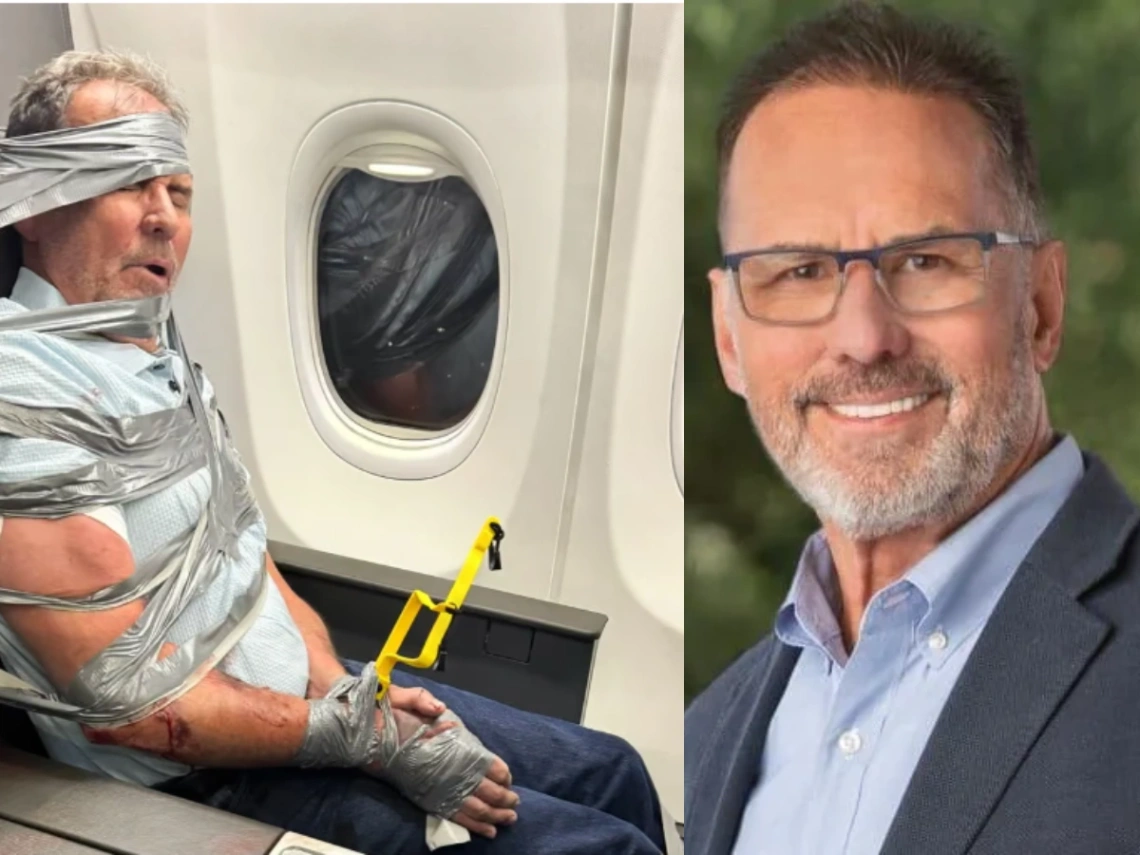
The list of disqualifying offenses is specific. For example, it includes "Interference with flight crew members or flight attendants." It also covers aircraft piracy and felonies involving a threat.
The UK works differently but lands in the same place. Vetting there looks at your criminal record, unspent convictions only. "The more serious, repeated, and more recent the offence(s), the more weight may be attached to it as an indicator of possible unsuitability," says UK's National security vetting page. Per the UK Civil Aviation Authority, disqualifying offences include but aren't limited to "convictions that call into question an individual's integrity and trustworthiness"a "any convictions directly related to terrorism".
Cabin crew need an airside pass, and since January 2022 that means an enhanced check that includes a UK Government accreditation check.
Other countries follow suit. Qantas says it completes "criminal and security clearances" before it makes an offer. WestJet requires you to pass a criminal background check.
A record isn't always a dead end. The US window is ten years and the UK counts only unspent convictions. But don't hide anything. United says answers on a submitted application can't be corrected.
After you're hired: US rules require you to tell the airport operator within 24 hours if you're convicted of a disqualifying offense, according to Cornell Law School.
2. Drug and Alcohol Violations
In the US, flight attendants do safety-sensitive work. That puts them under the FAA's drug and alcohol testing program. An employer can't hire you for that work until it gets a verified negative drug test. The FAA says testing "helps protect public safety and keep our skies safe."
Testing doesn't stop at hiring. For example, random, reasonable-cause and post-accident tests all apply. A failed test typically means the job offer is rescinded. WestJet also requires a "pre-employment drug and alcohol screening test."
UK alcohol rules are strict. The government's 2003 law sets the limit at "20 milligrammes of alcohol per 100 millilitres of blood" for aircrew. Cabin crew are covered, and the limit is four times stricter than for drivers.
The consequences can be severe. In 2024, a Delta captain was sentenced to 10 months in prison after reporting for duty at Edinburgh Airport over the UK limit. He was a pilot, but the same limit covers cabin crew.
After you're hired: Refusing a random test counts as a failed test.
3. Work Authorization and Travel Restrictions
Airlines need you legally employable and able to cross borders freely. For example, Southwest Airlines requires US work authorization "as defined by the Immigration Reform Act of 1986" and a valid, unexpired passport. United Airlines wants a passport with 12 months of validity and two blank consecutive pages. It also requires that you can travel to every country it serves without restrictions.
Rules differ by country. WestJet says you must "Be a Canadian citizen or hold a valid Canadian permanent residency card." Qantas requires Australian or New Zealand permanent residency and a passport with unrestricted access to its destinations.
In the UK, the burden falls on the employer. The government website states: "You must check that a job applicant is allowed to work for you" before they start.
Medical and Physical Disqualifications
4. Uncontrolled Medical Conditions
Airlines care about one thing here: could a condition incapacitate you in the air? That's why "All operating cabin crew must hold a valid cabin crew Medical Report" in the UK. An examiner marks you fit, unfit or fit with specified limitations, and reassessment happens at least every 60 months. Qantas requires a medical examination before an offer. WestJet requires a functional physical assessment.
A diagnosis alone shouldn't end your application. In the US, the EEOC has said "disability does not necessarily equate with inability." Employers are expected to assess you individually.
Two cases show how this plays out. In one older EEOC case, a diabetic applicant's conditional offer was withdrawn after a contract physician learned of his insulin use, and a jury rejected the airline's "direct threat" defense. That applicant wanted a baggage-handler job, not a flight attendant role.
A more recent one involves a flight attendant. A federal court allowed a former United flight attendant's disability claims to proceed. She has Crohn's disease and was fired in June 2022. United argued that dependability is an essential function of the job. The court hasn't decided the case. It only let the claims go forward.
After you're hired: Periodic medicals continue, and you must report any drop in fitness.
5. Sensory Impairments
You must hear and be heard in an emergency. United's requirements list "Ability to hear all types and ranges of sound" and require that you speak loudly enough to be heard. The UK regulator's guidance says "Hearing should be satisfactory for the safe exercise of cabin crew duties." It also expects normal fields of vision.
Correction usually isn't an automatic no. For example, a UK medical report can list a requirement to use hearing aids as a limitation. The CAA also lets airlines assess colour vision using criteria tailored to the cabin crew role.
In the US, ask early. United says applicants can request accommodations at any stage of hiring.
6. Mobility and Size Constraints
This one catches people off guard. Southwest's career page spells it out: you must be able to "fit into a jumpseat harness without modification," with no seatbelt extension. It also lists fitting quickly through the overwing window exit.
United tests reach: a combined 76-inch vertical and 43.5-inch horizontal reach, without shoes. It also requires a jumpseat fit with seatbelt and shoulder harness, and states there is no weight requirement.
Other countries publish their own numbers. For example, easyJet lists a jumpseat harness measuring 106 cm across the lap and 157 cm from shoulder to waist. Qantas lists a height range of 163 to 186 cm for most of its airlines. WestJet reportedly requires a 204 cm barefoot reach.
Some airlines still go further. Pakistan International Airlines drew fire for a memo telling flight attendants to lose up to 30 pounds of "excess weight."
Fit is the test, not the scale. If you're worried about either end of the spectrum, I wrote about both: You can be a flight attendant if you are short and a chubby or plus-size per can be a flight attendant.
7. Age Requirements
Minimum ages vary. United requires you to be 21 or older. Southwest sets 20. WestJet reportedly sets 19. Qantas and easyJet start at 18. One reason for 21 is alcohol service. It's the legal age for serving alcohol in the US.
There's generally no upper limit. Most guides report no maximum age for flight attendants. The law backs you up. The ADEA "protects individuals who are 40 years of age or older" from age discrimination. It doesn't cover people under 40. In the UK, "Age is one of 9 'protected characteristics'" under the Equality Act.
Age protection doesn't waive the physical tests. You still need the reach and the jumpseat fit.
Grooming and Appearance Policies
8. Visible Tattoos and Piercings
Policies are changing, but they're still strict. United bars tattoos on the head, hands, fingers and neck. Makeup or bandages can't cover them. Tattoos on arms, wrists, ankles and feet are allowed if they're no larger than a United badge or are covered by a uniform piece. If you're removing a banned tattoo, it must be fully gone before you apply.
For example, JetBlue now permits one visible tattoo, no larger than an ID badge, on the arms or legs. Delta still requires tattoos to be covered by clothing or waterproof makeup. Virgin Atlantic scrapped its ban in May 2022, the first major British airline to do so.
Alaska Airlines says "No visible tattoos on face, front of neck or chest."
Canada shows how fast things can shift. In 2021, a labour arbitrator ruled against Air Canada after the flight attendants' union called its policy "unreasonable and discriminatory." The airline must now allow non-offensive tattoos that aren't on the head or neck, except directly behind the ears.
After you're hired: Policies apply on the job, too. The Air Canada arbitrator ordered past discipline under the old rules removed from employees' records. That tells you crew had been disciplined for it.
9. Hair and Uniform Standards
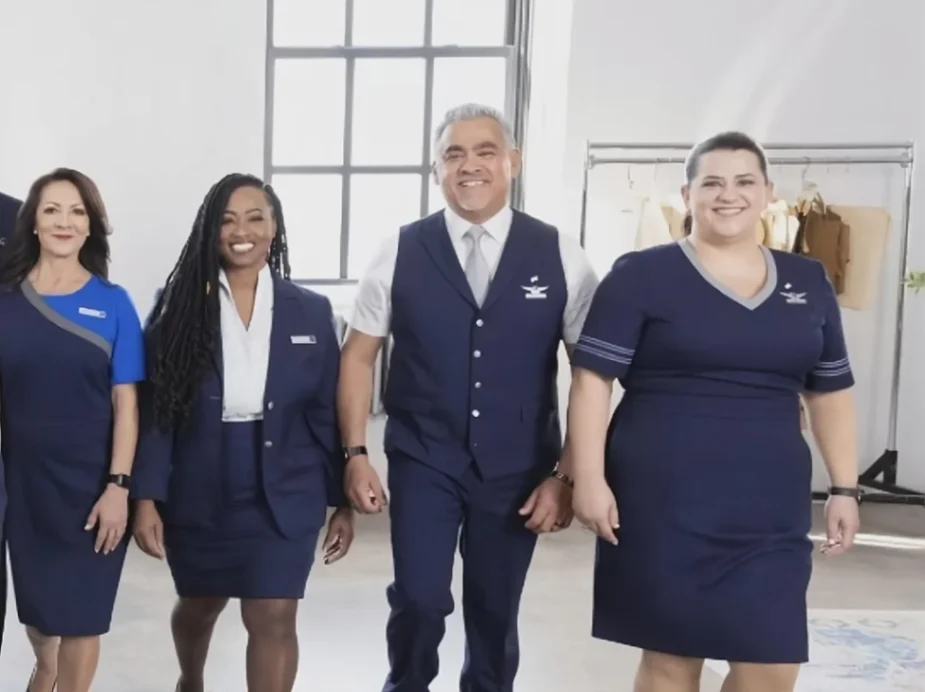
Hair, makeup and uniform rules are the easiest to fix. They're also the easiest to enforce. American's career site says trainees "must present a professional image" and may not have extreme hair colors or styles. United asks you to follow its uniform, hair, tattoo and piercing guidelines.
Some airlines have loosened up. For example, Virgin Atlantic dropped its makeup requirement for women in 2019 and made trousers a standard option. Qantas and Jetstar let crew wear long hair, glasses and flat shoes. Qantas said the update "modernizes the way employees wear it." WestJet advertises redesigned uniforms focused on comfort and body inclusivity.
Not every fight ends in a policy change. Air Canada's flight attendant union filed a human rights complaint, saying uniform and makeup policies discriminated against women.
If you think your face or figure has to match some ideal, it doesn't. I explain why in You Don't Have to Be Pretty to Be a Flight Attendant.
You're Hired. The Rules Don't Stop
Getting the job is step one. Airlines expect you to keep meeting the standards:
Disclose convictions. In the US, that means within 24 hours.
Stay test-ready. Random drug and alcohol testing continues throughout your career.
Keep your medical current. UK crew are reassessed at least every 60 months.
Keep your pass active. A UK airside pass is deactivated if you don't use it for 60 days.
Follow grooming rules. For example, United new hires work a six-month probation before they can transfer bases.
Final Thoughts on The Things That Disqualify You From Being a Flight Attendant
Most of these disqualifiers exist for a reason. A background check protects the cabin. A drug test protects the crew. A jumpseat harness protects you.
But a few are about appearance, and those are changing. Air Canada, Virgin Atlantic and Qantas show it.
Check the airline's current requirements before you apply, and be honest on every form. A fixable problem is only a problem if you find out too late.
And if you've already been turned down, don't take it as the final word. United, for example, lets rejected candidates reapply after 12 months.