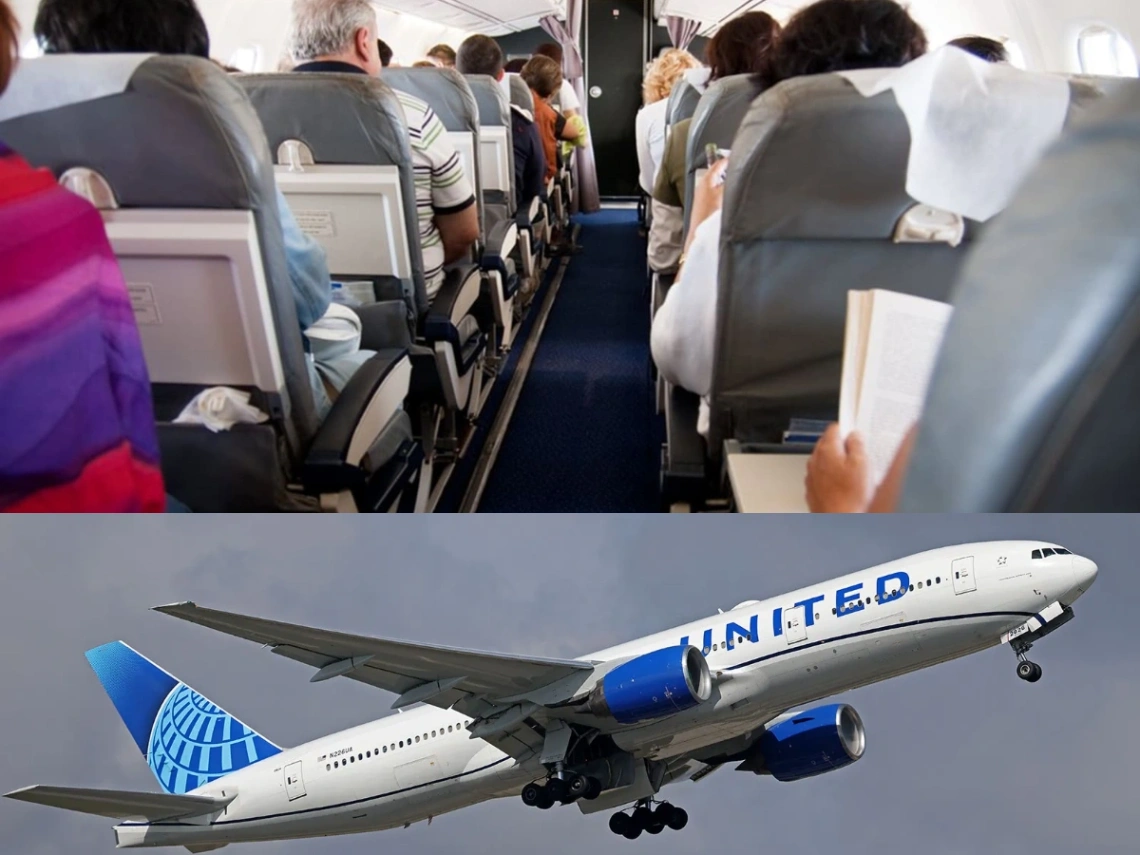
What causes unruly behavior on planes? Not one thing. That's the whole point of this article. What's the difference between an unruly and a disruptive passenger? In practice, very little. The Federal Aviation Administration (FAA) and International Air Transport Association (IATA) pair the terms as "unruly/disruptive" behavior.
I couldn't find one unique definition for either. The Tokyo Convention doesn't define "unruly passenger". As such, each state and even each airline may interpret it differently. What matters is severity. Behavior ranges from verbal abuse up to far more serious threats.
In 2021, US airlines sent the FAA 5,973 reports of unruly passengers, up 492% from 1,009 in 2020, per USA Facts.
Why are there so many unruly passengers on planes? Are there? Per flight, it's rare: one incident for every 480 flights, according to IATA. The count feels big because the number of flights is enormous. The 2021 spike had a clear driver. Of nearly 6,000 US incidents, 4,290 were mask-related.
The numbers have fallen since. That said, not back to normal. The FAA logged 2,075 reports in 2023 and levied $7.5 million in fines. Globally, IATA counted one unruly incident for every 480 flights in 2023, up from one per 568 the year before. That's based on about 24,500 reports from more than 50 operators. Physical abuse is far rarer. IATA recorded it once every 17,200 flights in 2022, a 61% jump over 2021.
Numbers like these invite a simple story: a few bad actors. IATA's own deputy director general blamed "a small but persistent minority." And alcohol is part of it. IATA says most intoxication incidents involve alcohol consumed before the flight. But part of the story isn't the whole story.
That's what I set out to test. I sorted unruly behavior into eight categories:
Alcohol and intoxication
Refusal to follow crew instructions and safety rules
Physical aggression and assaults
Sexual misconduct and indecent exposure
Medical episodes, confusion or possible medication-related behavior
Arguments, disputes and perceived disrespect
Group disturbances and collective non-compliance
Stress, anxiety and the pressures of air travel
For each of the first seven, I collected at least five documented incidents. That's 35 or more. For the eighth, I leaned on expert research instead of news stories. A headline can tell you what happened. It can't prove why. The incidents are examples. Not a representative sample of all disruptive passengers.
Perhaps, the most useful distinction in this research is between what triggered an incident, what the passenger did, and what authorities actually established. A passenger may be accused of assault while intoxicated, for example, but that does not make every assault an alcohol-related case.
1/ Alcohol and intoxication
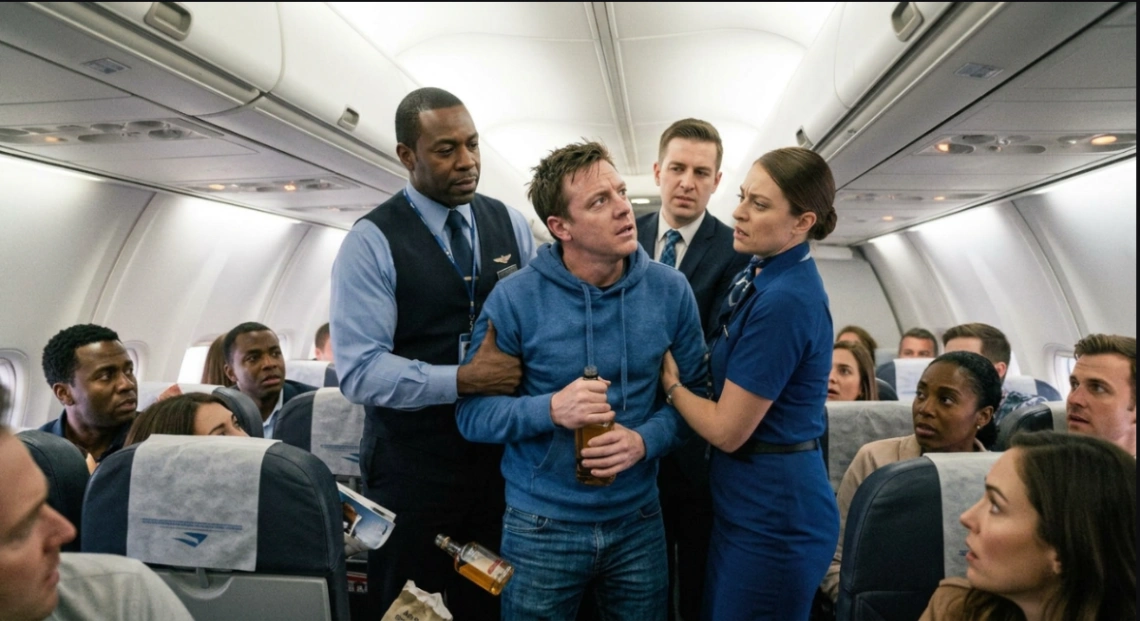
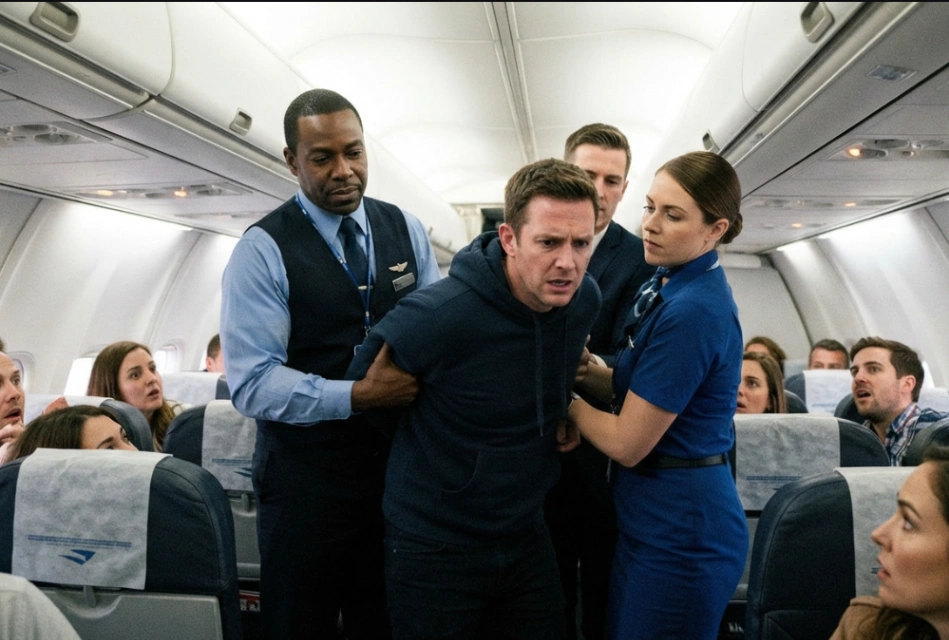
Incidents of unruly passengers on airplanes are, for the most part, caused by passenger intoxication, a new study by University of Texas at Dallas researchers shows.
The following cases specifically report intoxication, drinking alcohol, or behaviour linked to alcohol consumption.
United Airlines, London–Newark — March 2024: A flight was diverted to Bangor, Maine, after two passengers reportedly appeared intoxicated and disruptive. One passenger, Alexander MacDonald, faced charges related to interference with crew and assault.
Ryanair, Manchester–Ibiza — September 2024: A passenger reportedly drank duty-free vodka, hit cabin crew and spat at other passengers. The flight diverted to Toulouse, where police removed him; a woman travelling with him was also removed after allegedly becoming violent.
Jetstar, Hobart–Sydney — December 2024: Analisa Josefa Corr and her partner James Corr were reported to be intoxicated and to have consumed alcohol not supplied by the crew. They argued with staff, and Analisa was accused of grabbing another passenger. The pair later pleaded guilty to reduced charges and were fined.
Air Transat, Cuba–Hamilton, Ontario — February 2024: An Ontario passenger was charged after an in-flight disturbance involving threats to staff. Reporting described alcohol-related issues and the passenger’s desire to smoke as part of the incident.
Ryanair, Kraków–Bristol — November 2025: Stephen Blofield drank at the airport and on the aircraft, then reportedly abused staff and refused to comply with seatbelt and seating instructions during the approach. He was jailed for 10 months in April 2026.
Virgin Atlantic, Dubai–Heathrow — February 2026: Simone de Gale was reported to have been intoxicated and to have verbally abused cabin crew after being asked not to disturb sleeping passengers. She was reported convicted in absentia on charges that included being drunk on an aircraft and assault.
United Airlines, Newark-Fort Lauderdale — August 2026: A passenger became increasingly belligerent after flight attendants reportedly declined to serve him additional alcohol.
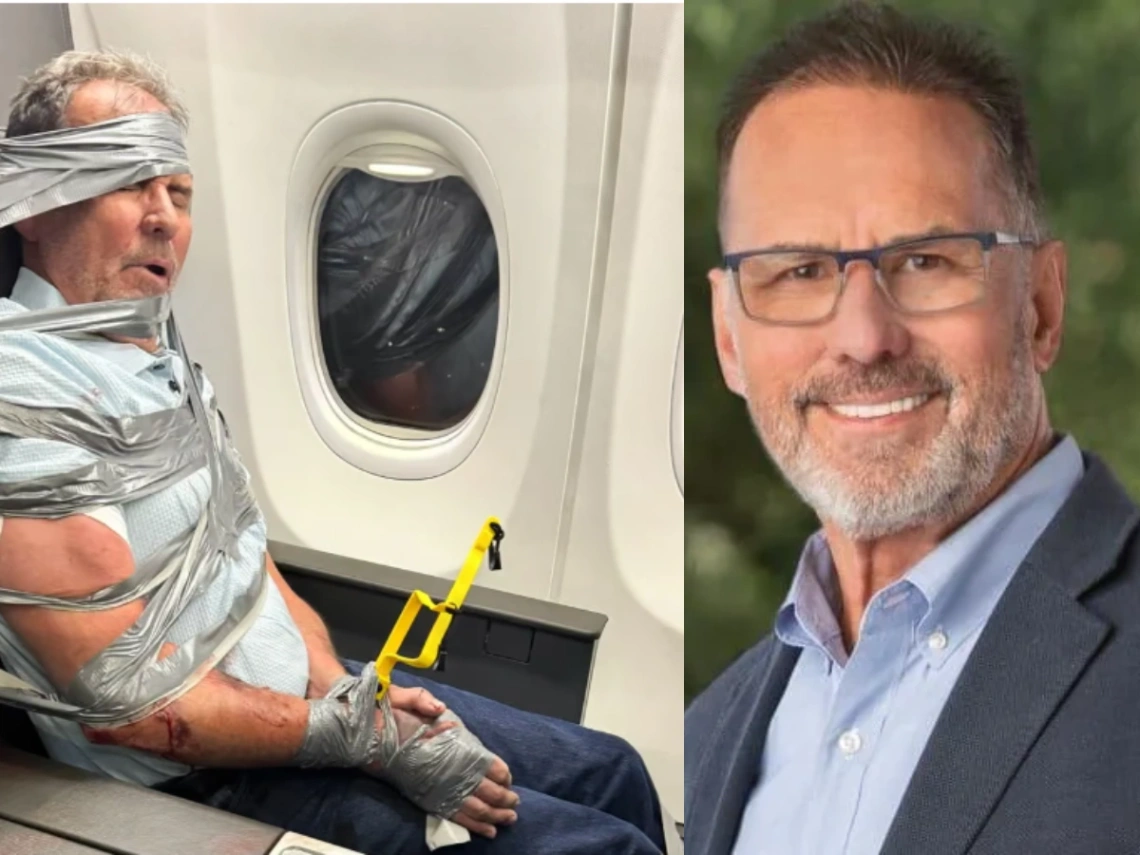
United Airlines bound for Houston, Texas — August 2026: United Passengers tackled a drunk man mid-air as the pilot warned “protect the flight deck at all costs,” as reported by Aero Saga.
What this category suggests: Alcohol is a frequently reported factor. That said, these cases do not establish that alcohol is the explanation for every unruly passenger. The FAA reported 106 intoxication-related disturbances among 915 unruly-passenger cases recorded from January 1 to June 9, 2024.
2/ Refusal to follow crew instructions or comply with safety rules
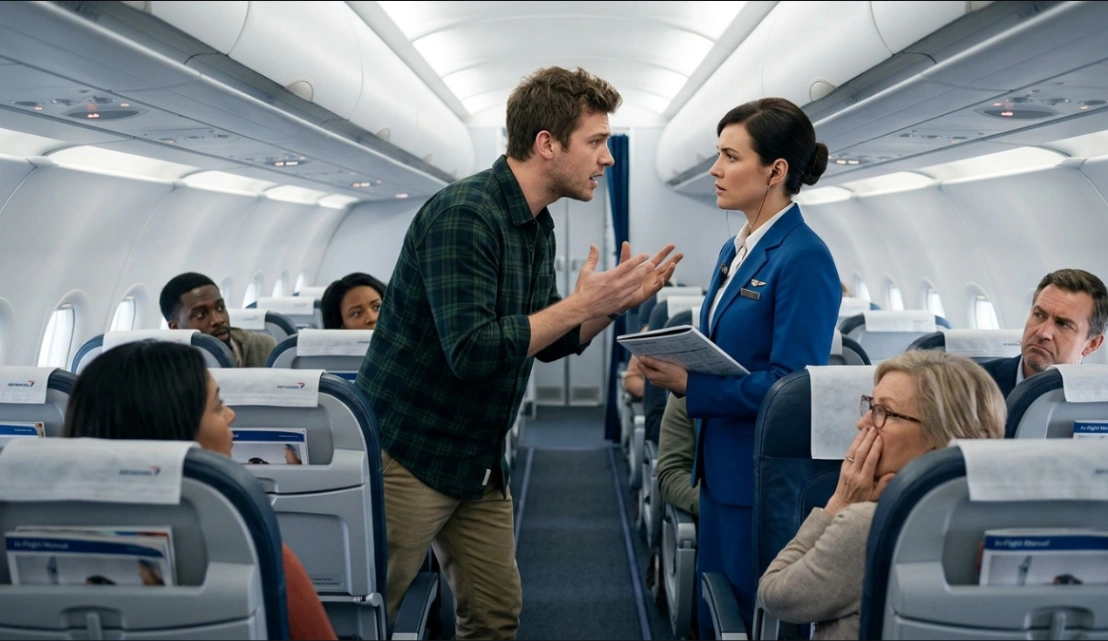
These cases are grouped by reported non-compliance with safety instructions or interference with aircraft operations. They are distinct from the alcohol cases above.
American Airlines Flight 2101, Seattle–Dallas — July 2024: Eric Nicholas Gapco was charged after allegedly assaulting or intimidating people and trying to open exterior aircraft doors. The aircraft diverted to Salt Lake City. The indictment was later dismissed in May 2026, so the allegations should not be described as a conviction.
Passenger on a flight from Sydney to Perth — January 2025: A woman was reportedly disruptive and refused crew instructions. After being escorted off the aircraft at Perth, she allegedly stabbed an Australian Federal Police officer with a pen while officers attempted to restrain her. She faced charges.
AirAsia, Malaysia–Sydney — April 2025: Shadi Taisser Ayed Alsaaydeh was charged after allegedly attempting to open emergency exits and choking a flight attendant who intervened. His lawyer told the court that he had taken medication and a sleeping pill and had also consumed alcohol; that account is not, by itself, proof of the cause.
Jetstar, Avalon–Sydney — March 2025: A 17-year-old allegedly breached airport security, boarded a plane carrying a loaded shotgun and made a bomb threat. A passenger, the pilot and others helped restrain him. This was a serious alleged security breach rather than an ordinary cabin dispute.
WestJet flight scheduled from Vancouver to Cabo — April 2026: Canadian police reported that 10 people were arrested following an incident that delayed the Mexico-bound flight. Police said the passengers allegedly failed to follow crew instructions and raised safety concerns.
Horizon Air Flight 2059, Everett–San Francisco — October 2023: Off-duty Alaska Airlines pilot Joseph Emerson tried to disable the aircraft’s engines while riding in the cockpit jump seat. He said he believed he was dreaming and had not slept for more than 40 hours; he also reported taking psychedelic mushrooms two days earlier.
3/ Physical aggression and assaults
These cases are grouped by reported physical violence. A reported assault does not, on its own, establish why the person became aggressive.
Qantas Flight QF21, Melbourne–Dallas — May 2026: The flight diverted to Papeete, Tahiti, after a passenger allegedly bit a flight attendant. Other passengers helped restrain the passenger, and Qantas subsequently banned the person from its flights.
Jetstar, Phuket–Melbourne — reported in 2026: A 21-year-old passenger was charged after allegedly grabbing and shaking a flight attendant who declined his request for a hug, then punching another passenger several times in the face. Aero Saga reported the charges.
Flight from Canberra to Perth — December 2025 incident, reported January 2026: A woman allegedly grabbed a crew member by the arm and head while the aircraft was preparing for take-off. Police said the crew member had checked on her after she behaved erratically towards another passenger.
Flight from Canberra to Perth — April 2026: A passenger allegedly shouted and swore, kicked and pushed a fellow passenger’s seat, then became aggressive when asked to stop. Police said he later allegedly kicked a crew manager and tried to bite another passenger while being restrained.
FAA-referred incident — February 18, 2024: The FAA listed a case involving a passenger who physically assaulted and verbally abused both a fellow passenger and a crew member. The agency’s public summary does not identify the airline or describe what triggered the incident.
What this category suggests: Physical aggression can follow a dispute or an intervention by crew. That said, the public record does not always reveal the underlying cause. The distinction matters. The act of assault may be documented even when the reason for it remains unknown.
4/ Sexual misconduct and indecent exposure
This category covers alleged sexual misconduct or deliberate exposure. It does not assume that nudity in every case had a sexual motive.
Virgin Australia, Perth–Melbourne — May 2024: A passenger allegedly ran naked through the aircraft and knocked a crew member to the floor. The flight returned to Perth, where police arrested him. The report does not establish why he behaved that way.
FAA-referred incident — February 13, 2024: The FAA reported a case involving sexually inappropriate behaviour directed at a crew member. Its public summary does not identify the airline or provide details about the conduct.
FAA-referred incident — December 30, 2023: The FAA listed a case involving sexual assault and inappropriate behaviour towards a fellow passenger.
FAA-referred incident — October 15, 2023: Another case involved alleged sexual assault of a fellow passenger alongside aggressive behaviour. The public record does not establish what prompted the conduct.
United Airlines, Rochester-Newark — September 2026: A 25-year-old woman accused United Airlines flight crew for making her return to her seat beside a man she had reported for allegedly masturbating while looking at her during a flight from Rochester, New York, to Newark Liberty International Airport.
5/ Medical episodes, confusion, or possible medication-related behaviour
This category needs particular care. A medical condition should not be inferred from unusual or aggressive behaviour. The explanation may come from a court account, police assessment or the passenger’s representatives, and those sources may differ.
Delta Air Lines, Los Angeles–New York — October 2026: Actress Selma Blair was charged after an incident involving flight attendants. Her representatives said she experienced a medical emergency related to multiple sclerosis and pseudobulbar affect and did not intend to hurt anyone. Blair pleaded not guilty, and the case should not be treated as proof that her condition caused the alleged conduct.
United Airlines, Chicago–Minneapolis — May 2026: A flight diverted to Madison after an older passenger reportedly appeared confused, stood while the aircraft was on the runway and later appeared to reach towards a flight attendant. The passenger was restrained. The reporting does not establish a medical diagnosis or confirmed cause.
All Nippon Airways, Tokyo–Houston — May 2025: A passenger allegedly tried to open aircraft exit doors, prompting a diversion to Seattle. Police reportedly assessed the man as experiencing a medical crisis and took him to hospital. A second passenger was also removed after a separate disturbance; the two incidents should not be conflated.
United Airlines, Brussels–Newark — June 2024: The flight diverted to Dublin after two separate incidents: a disruptive passenger and a passenger with a suspected medical issue. The reports do not establish that the medical incident caused the disruptive behaviour.
Horizon Air Flight 2059 — October 2023: In the earlier incident involving off-duty pilot Joseph Emerson, he said he believed he was dreaming and had not slept for more than 40 hours. He also reported taking psychedelic mushrooms two days earlier. His account is relevant to possible altered-state factors, but it should not be generalised to other passengers.
6/ Arguments, disputes and perceived unfair treatment
These cases focus on a reported disagreement or perceived grievance rather than assuming intoxication or a medical condition was responsible.
American Airlines, New York–Milan — April 2025: A flight turned back to New York after a passenger reportedly became irate about not receiving his preferred meal and being told he could not sit in an exit row with a baby. Passengers described the situation escalating after those disagreements.
American Airlines, Punta Cana–Las Vegas via Charlotte — September 2025: Ketty J. Dilone was accused of walking through the aisle yelling and threatening flight attendants. Prosecutors alleged she kicked a flight attendant, who fell, and that crew members restrained her. The public account does not identify a specific grievance that triggered the incident.
Volaris Flight 3041, El Bajío–Tijuana — December 2024: A passenger was arrested after allegedly trying to force the aircraft to divert to the United States. The airline said the flight was diverted to Guadalajara, where the passenger was taken into custody. The report describes the alleged act but does not establish the passenger’s underlying motive.
Air New Zealand, Perth–Auckland — reported in 2024: The flight made an unscheduled landing in Melbourne because of a disruptive passenger. The airline did not disclose detailed information about the passenger’s conduct or the trigger, so this is an example of a reported disturbance rather than evidence of a particular motive.
What this category suggests: Disagreements over service, seating or instructions may precede an escalation. But the reporting does not always reveal the passenger’s full perspective. It is more accurate to say that a dispute preceded an incident than to claim the dispute alone caused it.
7/ Group disturbances and collective behaviour
Group incidents deserve a separate look. That said, the presence of multiple disruptive passengers does not prove that peer pressure or group influence caused the behaviour.
United Airlines Flight 883, London–Newark — March 2024: Two passengers reportedly appeared intoxicated and disruptive, and both were removed after the flight diverted to Bangor, Maine. The reports do not establish whether one passenger influenced the other.
WestJet, Vancouver–Cabo — April 2026: Ten people were arrested after an incident involving alleged failure to follow crew instructions and safety concerns. The flight was delayed. Police reporting does not establish that the passengers acted because of peer pressure or a shared motive.
Ryanair, Manchester–Ibiza — September 2024: A passenger reportedly became violent after crew tried to confiscate duty-free vodka; a woman travelling with him was also removed after allegedly becoming violent. This is a group-associated incident, but the report does not prove that the woman’s behaviour was caused by the other passenger.
Jetstar, Hobart–Sydney — December 2024: A couple were involved in a disturbance after reportedly consuming alcohol not supplied by the airline. Both were dealt with by authorities, but the reporting does not establish whether they encouraged each other’s behaviour.
easyJet, Tenerife-Liverpool — July 2026: A routine flight turned into a nightmare in the skies after a large-scale altercation erupted among passengers. The mid-air brawl involved around 10 passengers, Aero Saga reported.
8/ Stress, anxiety and the pressures of air travel
This category is different. Stress and anxiety are potential contributing factors supported by research, not explanations that can be assigned confidently to individual news cases without evidence.
Confinement and limited personal space. A research-based explainer published by RTÉ discusses how cramped seating, restricted movement and the feeling of being confined can contribute to frustration during air travel.
Frustration along the travel chain. Queues, delays, crowded airports and the stress of getting to a destination can build up before passengers board. The same explainer discusses how these pressures may interact with other factors rather than cause every incident on their own.
Fear of flying and anxiety. A study interviewing 24 European cabin crew members found that fear of flying was among the factors crew perceived as potentially relevant to disruptive behaviour. The study records crew perceptions, not diagnoses of individual passengers.
Perceived inequality and entitlement. Research discussed by RTÉ examines whether cabin-class distinctions and the visibility of unequal treatment can feed frustration or a sense of entitlement in some passengers. This is a proposed contributing factor, not a universal explanation.
Nicotine withdrawal. The same research explainer discusses nicotine withdrawal as a potential contributor to irritability for some passengers who cannot smoke during a flight. It should not be used to infer why a particular passenger behaved aggressively.
Overall findings
Across the reports reviewed, the recurring patterns are:
Alcohol and intoxication: repeatedly identified in reports of disruptive behavior, sometimes alongside refusal to follow instructions.
Non-compliance with crew instructions: includes refusing to remain seated, interfering with safety procedures and allegedly attempting to open aircraft exits.
Physical aggression: includes alleged assaults on crew and fellow passengers, although the trigger is not always known.
Sexual misconduct and indecent exposure: serious incidents that should not automatically be attributed to intoxication or mental illness.
Medical or altered states: explanations must be handled carefully and attributed to the source that reported them.
Disputes and group settings: disagreements and multiple-person incidents occur, but the underlying motive or influence of other passengers is often unclear.
Travel stress: research suggests plausible contributing factors, but it cannot establish the cause of an individual incident.
Final Thoughts
Eight categories. Dozens of incidents. One lesson kept coming back: unruly behavior is rarely about one thing.
Alcohol seldom acts alone. Neither does stress, or a dispute, or a medical episode nobody recognized in time. They stack. A long delay, a drink at the gate and a crew request that feels like a challenge can turn an ordinary passenger into a problem. That's why I won't tell you there's one cause to fix.
Here's what I'd take from it.
If you're a passenger, know what sets you off and plan around it. Remember that IATA links most intoxication cases to drinking before boarding. And follow crew instructions first. You can argue later. The FAA can propose fines of up to $37,000 per violation.
And if you're sitting near the next incident, remember the crew deals with this far more often than you do.
Understanding why it happens doesn't make it acceptable. But it gives us better tools than outrage. If we blame only one cause, we'll fix only one. So the next time you read a headline about a disruptive flight, ask a second question: what else was going on?