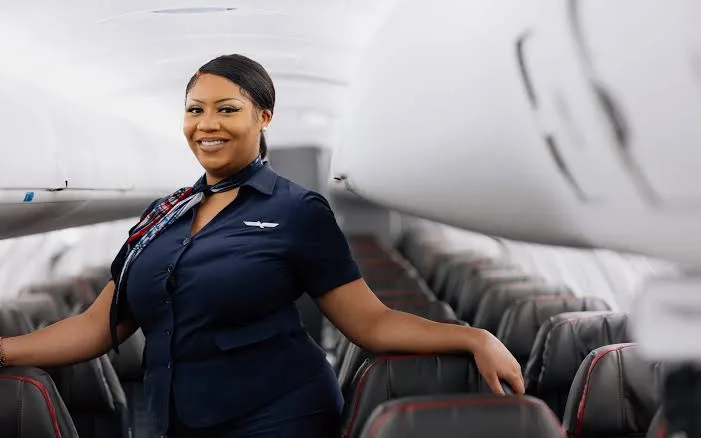
A flight attendant can spot a bad travel decision before most passengers even realize they've made one.
After spending years in airports and thousands of hours in the air, flight attendants see the same mistakes play out over and over again. The job has also made them frequent travelers themselves, giving them plenty of opportunities to learn what makes a trip smoother. And what can turn a simple journey into a stressful one.
Along the way, they've picked up practical travel habits and witnessed plenty of mishaps, both in airport terminals and inside the aircraft cabin.
Whether they're traveling as passengers or working a flight, these are some of the mistakes flight attendants say they see travelers make most often. And the simple ways to avoid them.
1. Not Getting to the Airport Early Enough
Missing a flight can happen long before the aircraft ever leaves the gate. One of the most common mistakes travelers make is simply not giving themselves enough time to get to the airport, get through security and reach their gate.
A useful rule of thumb is to arrive two hours before a domestic flight and three hours before an international flight. Parking can take longer than expected, check-in lines can move slowly, TSA may be backed up, or your gate could change after you arrive.
Flight attendant Leanna Coy, who has worked as a flight attendant since 2022, tells Business Insider:
“People often ask me what the latest time they can get to the airport is because they don't want to wait around. But in my opinion, trying to arrive as late as possible isn't worth the risk.”
Coy added: “Regardless, I'd rather have the extra time to relax at the airport before my flight. If the day goes smoothly, you can use those extra hours to refill your water bottle, stop by the restroom, grab a coffee, and buy snacks for the plane.”
Arriving early can also give you some protection when things don't go according to plan. On an oversold flight, airlines may have to deny boarding to some passengers, and the U.S. Department of Transportation notes that passengers who check in later can be more likely to be selected for involuntary bumping.
The extra time may feel unnecessary when everything is running smoothly. But when something goes wrong, you'll be glad you have it.
2. Getting Intoxicated at the Airport Bar
Having a drink before a flight may seem harmless, but getting visibly intoxicated at the airport can leave you without a seat on the plane. Flight attendant Leanna Coy told Business Insider: “This is the most common reason I've had to have [passengers kicked off my flights].”
The FAA prohibits airlines from allowing anyone who appears to be intoxicated to board an aircraft. Airlines are also prohibited from serving alcohol to passengers who appear intoxicated.
The concern goes beyond simply being drunk. An intoxicated passenger may have difficulty following a flight attendant's instructions, and alcohol can contribute to disruptive or aggressive behavior. Once an aircraft is in the air, dealing with that kind of situation is far more difficult than handling it at an airport.
A recent example appeared on Aero Saga when a United Airlines passenger became increasingly disruptive after drinking during a flight. The situation escalated until several passengers restrained him while the captain instructed everyone to remain seated and warned them to “Protect the flight deck at all costs.”
And passengers don't necessarily have to cause a disturbance before an airline can refuse boarding. If someone appears intoxicated during the boarding process, the airline cannot allow that person onto the aircraft under FAA regulations. In May 2026, the FAA proposed a $165,000 civil penalty against Alaska Airlines over allegations that intoxicated passengers were allowed to board 11 flights.
If you're going to have a drink before your flight, knowing your limit matters. Getting to the airport early is useful; getting so drunk that the crew questions whether you should fly is another story.
3. Leaving the Airport During a Delay
A delayed flight can make an airport feel like the last place you want to be. But leaving the airport—or even wandering too far from your gate—can backfire if the delay suddenly disappears.
“Flights can ‘un-delay,’” Coy tells Business Insider. It's rare. That said, it happens. Airlines sometimes issue delays in small increments while they wait for a solution, such as a replacement aircraft, an available crew or improving weather conditions.
Coy says passengers who live nearby may be tempted to go home when their flight is pushed back, while others may simply leave the gate to get food or coffee. But she warns: “If the delay reverses and you're not there, the plane will leave without you.”
A recent Washington Post account shows how quickly that can happen. Travel writer Andrea Sachs was waiting for an American Airlines flight from Washington Reagan National Airport to Boston when the departure was delayed. She left the gate to get coffee, but when she returned, the other passengers had boarded and the aircraft doors were closed. The plane was still connected to the jet bridge, but she was not allowed to board.
The lesson is simple: a delay is not a cancellation. Stay close enough to your gate that you can get back quickly, and keep checking the airline's app and airport displays for changes.
4. Not Selecting Your Seat in Advance
If you want to sit next to the person you're traveling with, don't leave your seat selection until the last minute. Waiting can leave you with whatever seats are still available, which often means a middle seat or being separated from your travel companion.
Even when you're traveling alone, choosing your seat in advance can make the flight more comfortable. And if you have a tight connection, paying for a seat closer to the front could give you a better chance of getting off the aircraft quickly.
“When I fly as a passenger, I always pick my seat. I want the window seat on short flights because I like the view, and the aisle for long-hauls so I can get up without disturbing anyone else,” Coy says.
She adds: “Some airlines will let you choose your seat for free, but others will charge a fee. Regardless, I believe it's worth it.”
A recent Aero Saga story shows why choosing your seat in advance can also prevent an awkward situation onboard. One Jetstar passenger had specifically selected her business-class seat for a long-haul flight, only to be asked by another passenger to switch so she could sit next to her partner. When she refused, the other passenger became angry and allegedly made the rest of the flight uncomfortable for her.
The earlier you choose, the more control you have over where you'll spend the next few hours. Waiting until check-in means accepting what's left.
5. Forgetting to Wipe Down Your Seat Before Sitting
The quick turnaround between flights means cleaning crews don't always have much time before the next group of passengers boards. Depending on the airline and the length of the turnaround, cleaning may focus on visible trash and other obvious messes rather than every surface around your seat.
Flight attendant Leanna Coy says she has seen enough to make disinfecting wipes a permanent part of her travel bag.
“Considering I see bare feet and dirty diapers on the tray tables almost daily, I never travel without my own disinfecting wipes. In my opinion, the only way to truly guarantee your seat has been sanitized is to do it yourself,” Coy says.
You don't need to wipe down every inch of the seat. Concentrate on the surfaces you'll touch most, such as the tray table, armrests, seat-belt buckle and the area around your seat. It's a small step that takes less than a minute but can give you some extra peace of mind before settling in for the flight.
6. Not Putting Your Wheels Into the Storage Bins First
When you place your carry-on in the overhead bin, the way you position it can make a difference. Putting the wheels in first helps leave more usable space for other passengers' bags and reduces the amount of rearranging flight attendants have to do.
A Southwest flight attendant, who spoke anonymously to Travel + Leisure, explained why this simple mistake can be frustrating for cabin crew.
“Please, please, please, for the love of all that is holy, put your wheels into the storage bins first,” the flight attendant told Travel + Leisure, adding: “Think about it: You just wheeled your bag from your house, into the street, over the airport floor, and through the bathroom. We often have to rearrange suitcases to create room on busier flights. Guess who has to touch all of your germ-ridden suitcases? We do.”
This is the most annoying thing to do on a plane, according to the FA.
It may seem like a small detail, but placing your bag wheels-first can make better use of the overhead space and means fewer bags need to be moved around when the bins start filling up.
So when you lift your carry-on overhead, remember: wheels in first.
7. Touching or Poking Flight Attendants to Get Their Attention
If you need a flight attendant's attention, use your words or the call button instead of reaching out and touching them. A simple “excuse me,” “ma'am,” or “sir” is enough, and waving can work if they're too far away to hear you.
“Please don’t touch or poke us to get our attention. I’m not sure why people automatically assume this is ok on a plane. I understand there could be a language barrier. But use your words such as “excuse me?, excuse me, ma’am? excuse me, sir?” Or non verbal language like waving at us. Hell I would even respond to a snap. Just don’t touch me. Thanks,” one flight attendant said on Reddit.
Flight attendants have also told Travel + Leisure and The Washington Post that unwanted touching is a recurring complaint among cabin crew.
It's more than just an annoyance. Unwanted physical contact can cross a personal boundary, particularly when a passenger grabs or pokes a crew member instead of simply asking for help.
A recent Aero Saga report showed how quickly unwanted physical contact can escalate. According to the Australian Federal Police, a 21-year-old passenger on a flight from Phuket to Melbourne allegedly grabbed a female flight attendant by the shoulders and shook her after she refused his request for a hug. He was later restrained by cabin crew and handed over to police after landing.
The simple rule is easy to remember: if you need a flight attendant, ask for their attention—don't grab it.
8. Walking Around Barefoot on the Plane
Taking your shoes off at your seat might make a long flight more comfortable, but walking around the cabin barefoot is a different matter. Flight attendants deal with spills and bodily fluids that passengers may never notice, particularly around the lavatory and aisle.
One anonymous flight attendant on Reddit explained why passengers should keep their shoes on when leaving their seats:
“I'm a flight attendant.... So many incidents occur on the plane that every day passengers don't see or consider. My last flight an elderly man accidentally shit on the floor, stepped in it, and walked on like it was nothing. DO NOT WALK AROUND BAREFOOT," she warns, adding that "Pee and poop happens, all over. I feel like I witness an "accident" regularly; in their seat or in the lav. People get nose bleeds, or their wounds open. Obviously when we land, it is thoroughly cleaned. But inflight our resources are limited.”
The cabin crew may clean up what they can during the flight, but they have limited supplies and space to deal with these incidents until the aircraft reaches its destination.
So if you want to take your shoes off during a long flight, keep them at your seat. When you need to walk to the lavatory or elsewhere in the cabin, put them back on.
9. Putting Food Directly on the Tray Table
Your tray table might look clean, but that doesn't necessarily mean it has been sanitized between flights. Passengers use them for everything from eating and working to changing diapers, which is why flight attendants often recommend keeping food off the surface itself.
“Tray tables are rarely if ever sanitized do not put food directly on them,” one flight attendant said.
If you're eating something that doesn't have its own wrapper or container, use a plate, napkin or other barrier rather than placing it directly on the tray table. And if you plan to use the table during your flight, carrying a few disinfecting wipes can be an easy way to clean the surface before you eat.
It takes only a few seconds, but it's one less thing to worry about while you're having your meal at 30,000 feet.
10. Panicking When a Flight Is Delayed for Technical Reasons
Seeing maintenance crews board your aircraft after a delay can understandably make some passengers nervous. But a technical delay doesn't automatically mean there is serious danger. In many cases, it means the airline has identified something that needs to be checked before the aircraft departs.
As one flight attendant explained:
“Lots of passengers panic when the flight is delayed for technical reasons or when they see the maintenance guys board the aircraft. There's really no need to be! That just means that we're aware of a problem and won't budge until it has been resolved," she says, adding: "Much better to be aware of a problem on ground than at 36000 feet! The pilots do thorough pre-flight checks to make sure that everything is ok, and the engineers check the aircraft at the end of the day. Flying is safer now than it ever has been, no need to worry!”
A maintenance delay can be frustrating, especially when you don't know how long you'll be waiting. But the fact that the aircraft is being inspected before takeoff is part of the safety process—not necessarily a reason to panic.
If you're told that a technical issue is being investigated, the safest approach is to let the crew and maintenance team do their jobs rather than assuming the worst.
Summary
Don’t get to the airport late.
Don’t get intoxicated at the airport bar.
Don’t leave the airport during a flight delay.
Don’t skip selecting your seat in advance.
Don’t forget to wipe down your seat before sitting down.
Don’t put your carry-on in the overhead bin wheels-up.
Don’t touch or poke flight attendants to get their attention.
Don’t walk around the plane barefoot.
Don’t put food directly on the tray table.
Don’t panic when your flight is delayed for technical reasons.